Introduction
What Is Web3? Beginner’s Guide is a common question among people who want to understand the next generation of the internet. Web3 represents a new vision of the internet built on blockchain technology, decentralization, digital ownership, and user control.
Unlike Web2, where large companies control most online platforms and user data, Web3 aims to create a more open and decentralized digital ecosystem. Users can interact directly with applications, own digital assets, and participate in online communities without depending entirely on centralized organizations.
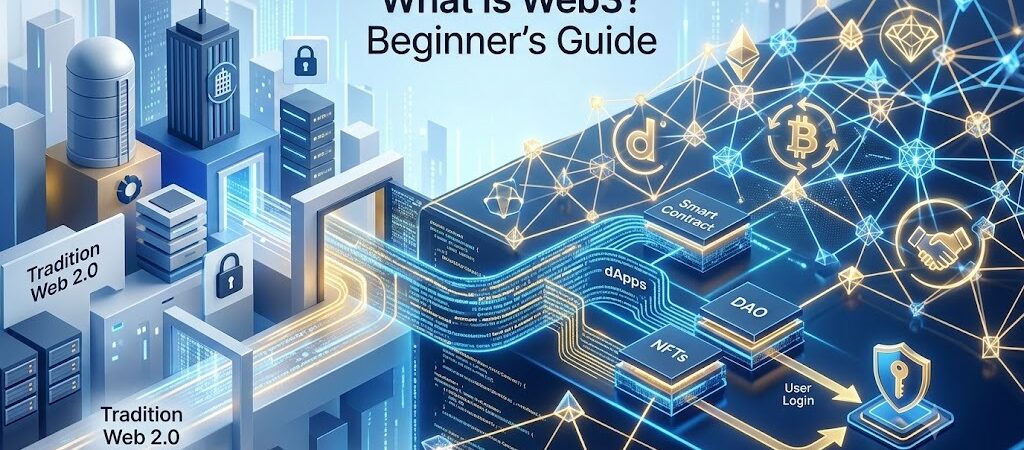
Web3 combines technologies such as blockchain networks, cryptocurrencies, smart contracts, decentralized applications (dApps), artificial intelligence, and digital identity systems to create a more transparent and user-focused internet.
In this beginner’s guide, we will explain what Web3 is, how it works, its key features, benefits, challenges, and why it could shape the future of the digital world. 🌐
What Is Web3? (Simple Explanation)
Web3 is the next generation of the internet that focuses on decentralization, user ownership, and blockchain-based technology. Instead of relying mainly on large centralized companies to store data and control online services, Web3 allows users to interact through decentralized networks. https://cryptopulsemagazine.com/top-10-blockchain-networks-in-2026/
In simple terms, Web3 aims to create an internet where people have more control over their digital identities, assets, and online activities.
Evolution of the Internet
To understand Web3 better, it helps to look at how the internet has developed:
Web1: The Read-Only Internet
Web1 was the early version of the internet where users could mainly view information on websites. What Is Web3? Most pages were static, and interaction was limited.
Web2: The Social Internet
Web2 introduced interactive platforms, social media, online shopping, and user-generated content. However, many Web2 platforms are controlled by centralized companies that manage user data and online experiences.
Web3: The Decentralized Internet
Web3 uses blockchain technology to create a more open internet where users can own digital assets, control their data, and interact with decentralized applications without depending entirely on centralized platforms.
Key Idea of Web3
The main goal of Web3 is to shift power from centralized platforms toward users by providing:
- Digital ownership
- Greater privacy and control
- Transparent transactions
- Decentralized applications
- Permissionless access
Web3 is still developing, but it represents a major shift in how people may use the internet in the future. 🌐
How Does Web3 Work?
Web3 works by combining several advanced technologies that allow users to interact with digital services in a decentralized way. What Is Web3? Unlike traditional internet systems that depend on centralized servers, Web3 uses blockchain networks to record information securely and transparently. https://cryptopulsemagazine.com/bitcoin-vs-gold/
Here are the main components that make Web3 possible:
1. Blockchain Technology
Blockchain is the foundation of Web3. It is a decentralized digital ledger that stores transaction records across many computers instead of a single central server.
This technology provides:
- Transparency
- Security
- Data integrity
- Decentralized control
Popular blockchain networks supporting Web3 include Ethereum, Solana, Polygon, and other smart contract platforms.
2. Smart Contracts
Smart contracts are self-executing programs stored on blockchain networks. What Is Web3? They automatically perform actions when specific conditions are met, removing the need for traditional intermediaries.
Smart contracts power many Web3 applications, including:
- Decentralized finance (DeFi)
- NFT marketplaces
- Blockchain gaming
- Digital identity systems
3. Cryptocurrencies and Digital Assets
Cryptocurrencies play an important role in Web3 by enabling digital payments and interactions within decentralized ecosystems.
Users can use crypto assets for:
- Online transactions
- Governance participation
- Paying blockchain network fees
- Owning digital items
4. Decentralized Applications (dApps)
Web3 applications, known as dApps, run on blockchain networks instead of traditional centralized servers.
Examples include:
- Decentralized exchanges
- Lending platforms
- NFT platforms
- Blockchain-based games
5. Digital Wallets
Crypto wallets allow users to access Web3 services, manage digital assets, and interact with blockchain applications.
Unlike traditional accounts, Web3 wallets give users direct ownership and control over their digital assets.
Simple Summary
Web3 works by combining blockchain, smart contracts, cryptocurrencies, decentralized applications, and digital wallets to create a more open and user-controlled internet. https://cryptopulsemagazine.com/what-is-defi-complete-beginners-guide/
🚀 Web3 is transforming the internet from a platform controlled by companies into an ecosystem where users can participate and own digital value.
Key Features of Web3
Web3 introduces several important features that make it different from previous versions of the internet. What Is Web3? These features focus on decentralization, ownership, transparency, and giving users more control over their digital experiences.
1. Decentralization
The biggest feature of Web3 is decentralization. Instead of storing information on centralized servers controlled by large companies, Web3 applications operate on distributed blockchain networks.
This helps create:
- More user control
- Reduced dependence on intermediaries
- Greater network transparency
- Improved resistance to censorship
2. Digital Ownership
Web3 allows users to truly own digital assets through blockchain technology. What Is Web3? Unlike traditional online platforms where companies control accounts and data, Web3 gives users ownership through crypto wallets.
Examples include:
- Cryptocurrencies
- NFTs
- Digital collectibles
- Tokenized assets
3. Transparency
Blockchain networks record transactions on public ledgers, allowing users to verify information and track activities.
This transparency helps improve trust in areas such as:
- Financial transactions
- Digital ownership
- Smart contracts
- Decentralized applications
4. Permissionless Access
Web3 allows anyone with an internet connection and a compatible wallet to access many decentralized services without needing approval from traditional institutions. https://www.coindesk.com/tag/web3
Users can participate in global digital ecosystems regardless of location.
5. User Privacy and Control
Web3 aims to give users more control over their personal information. What Is Web3? Instead of platforms collecting and controlling large amounts of user data, decentralized systems can provide more privacy-focused solutions.
6. Token-Based Economies
Web3 uses digital tokens to create new economic models. These tokens can represent ownership, access rights, rewards, or voting power within online communities.
7. Interoperability
Many Web3 projects aim to connect different blockchain networks and applications, allowing digital assets and information to move more easily across platforms.
Summary
The key features of Web3 — decentralization, ownership, transparency, privacy, and interoperability — are designed to create a more open and user-focused internet.
🌐 As Web3 continues to develop, these features could transform how people interact with digital services worldwide.
Benefits of Web3 Technology
Web3 technology offers several potential benefits by changing how people interact with digital platforms, financial services, and online communities. What Is Web3? By using blockchain technology and decentralized systems, Web3 aims to create a more open, secure, and user-focused internet.
1. Greater User Ownership
One of the biggest advantages of Web3 is that users can have more control over their digital assets and online identity. Instead of platforms owning user data and digital items, blockchain technology allows individuals to maintain ownership through their wallets.
2. Improved Transparency
Web3 applications operate on blockchain networks where transactions and activities can be verified. What Is Web3? This transparency can help build trust between users, businesses, and digital communities. https://web3.foundation/
3. Enhanced Security
Blockchain technology uses cryptographic security and decentralized networks to protect information. What Is Web3? Because data is distributed across multiple nodes, Web3 systems can reduce the risks associated with centralized data storage.
4. Financial Inclusion
Web3 and decentralized finance (DeFi) can provide access to financial services for people around the world without requiring traditional banking systems.
Users can access services such as:
- Digital payments
- Lending and borrowing
- Asset management
- Global transactions
5. New Digital Economies
Web3 creates opportunities for new business models through cryptocurrencies, NFTs, token rewards, and decentralized platforms. Creators and users can participate directly in digital economies.
6. Reduced Dependence on Intermediaries
Smart contracts allow blockchain applications to perform transactions automatically without relying on traditional middlemen. What Is Web3? This can make certain digital services faster and more efficient.
7. Innovation Across Industries
Web3 technology is being explored in many sectors, including:
- Finance
- Gaming
- Healthcare
- Supply chain management
- Entertainment
- Artificial intelligence
Summary
Web3 has the potential to create a more decentralized and user-controlled internet by improving ownership, transparency, security, and access to digital services.
🚀 While Web3 is still developing, its technology continues to attract developers, businesses, and users worldwide.
Web3 vs Web2: What Is the Difference?
To understand the importance of Web3, it is helpful to compare it with the current internet model known as Web2. While Web2 focuses on interactive platforms and centralized services, Web3 aims to create a more decentralized and user-owned digital ecosystem.
| Feature | Web2 | Web3 |
|---|---|---|
| Control | Controlled mainly by centralized companies | Controlled by decentralized networks and users |
| Data Ownership | Companies often store and manage user data | Users can have greater control over their data |
| Applications | Centralized platforms and servers | Decentralized applications (dApps) |
| Payments | Traditional payment systems | Cryptocurrency and blockchain-based payments |
| Identity | Account-based identities controlled by platforms | Wallet-based digital identities |
| Ownership | Limited ownership of digital content | Users can own digital assets through blockchain |
| Transparency | Limited visibility into platform operations | Blockchain records can be publicly verified |
Web2 Example
Social media platforms, online marketplaces, and streaming services are examples of Web2 applications. What Is Web3? Users create content and interact online, but the platform usually controls the data, rules, and digital environment.
Web3 Example
Web3 applications use blockchain technology to give users more control. Decentralized exchanges, NFT platforms, blockchain games, and DeFi applications allow users to interact directly with digital systems.
Main Difference
The biggest difference between Web2 and Web3 is ownership and control.
- Web2 focuses on platforms providing services to users.
- Web3 focuses on users participating in and owning parts of the digital ecosystem.
Future Outlook
Web3 does not necessarily replace Web2 completely. Instead, many experts believe future internet systems may combine the convenience of Web2 with the ownership, transparency, and decentralization features of Web3.
🌐 The transition toward Web3 represents a major evolution in how people may use the internet, manage digital assets, and interact online.
Real-World Uses of Web3 Technology
Web3 is not only a concept for the future; many industries are already exploring and using blockchain-based solutions. What Is Web3? By combining blockchain, smart contracts, cryptocurrencies, and decentralized applications, Web3 is creating new ways for people and businesses to interact online.
1. Decentralized Finance (DeFi)
Decentralized finance is one of the most successful areas of Web3. DeFi platforms allow users to access financial services without relying on traditional banks or intermediaries.
Examples include:
- Crypto lending and borrowing
- Decentralized exchanges
- Digital asset management
- Automated financial services
2. NFTs and Digital Ownership
Web3 enables true ownership of digital items through non-fungible tokens (NFTs). NFTs can represent unique digital assets such as artwork, collectibles, gaming items, tickets, and virtual property.
3. Blockchain Gaming
Web3 gaming introduces new models where players can own in-game assets and trade digital items. What Is Web3? Unlike traditional games, blockchain games can allow users to maintain ownership of their virtual assets.
4. Digital Identity
Web3 can provide decentralized identity solutions where users have more control over their personal information. Instead of relying on multiple centralized accounts, users may manage their digital identity through blockchain-based systems.
5. Supply Chain Management
Businesses can use blockchain technology to improve transparency and tracking across supply chains. What Is Web3? Companies can record product information securely from production to delivery.
6. Tokenization of Real-World Assets
Web3 allows real-world assets such as real estate, commodities, and financial instruments to be represented digitally on blockchain networks.
Benefits include:
- Easier ownership transfer
- Greater transparency
- More accessible investment opportunities
7. Creator Economy
Web3 provides new opportunities for creators by allowing them to connect directly with audiences, earn through digital assets, and build community-driven projects.
8. Artificial Intelligence Integration
The combination of Web3 and AI is creating new possibilities in decentralized AI networks, data ownership, and transparent automated systems.
Summary
From finance and gaming to identity and business solutions, Web3 is expanding into many industries. What Is Web3? As blockchain technology improves, more real-world applications are expected to emerge.
🚀 Web3 has the potential to reshape how people own, exchange, and interact with digital information and assets.
Challenges and Risks of Web3 ⚠️
Although Web3 offers many exciting opportunities, it also faces several challenges that must be addressed before widespread adoption. Understanding these risks is important for users, investors, and businesses entering the Web3 ecosystem.
1. Complexity for New Users
Web3 technology can be difficult for beginners to understand. What Is Web3? Concepts such as blockchain wallets, private keys, gas fees, and smart contracts may create barriers for people who are new to cryptocurrency.
Better user interfaces and educational resources are needed to make Web3 easier for everyone.
2. Security Risks
While blockchain technology is highly secure, Web3 applications can still face security issues. What Is Web3? Smart contract bugs, phishing attacks, and wallet security problems can result in financial losses.
Users should always:
- Protect private keys
- Use trusted platforms
- Research projects before investing
3. Scalability Issues
Some blockchain networks still face challenges with handling large numbers of users and transactions. What Is Web3? High network activity can sometimes lead to slower transactions and increased fees.
Developers are working on solutions such as:
- Layer-2 scaling
- Faster blockchain architectures
- Cross-chain technology
4. Regulatory Uncertainty
Governments around the world are still developing rules for cryptocurrencies, decentralized applications, and digital assets. Changing regulations may affect how Web3 projects operate.
5. Privacy Concerns
Although blockchain provides transparency, public transaction records can create privacy challenges. Developers are exploring new technologies to balance transparency with user privacy.
6. Energy Consumption
Some blockchain networks have faced criticism regarding energy usage. However, many modern networks now use more efficient consensus mechanisms such as Proof of Stake (PoS) to reduce environmental impact.
7. Market Volatility
Cryptocurrency markets can experience significant price changes. Digital assets connected to Web3 projects may carry investment risks due to market uncertainty.
Summary
Web3 has great potential, but challenges related to security, usability, regulation, and scalability must be solved for mass adoption.
🌐 As the technology continues to mature, improvements in infrastructure and education may help create a safer and more accessible Web3 ecosystem.
Future of Web3 Technology in 2026 🚀
Web3 technology is entering an important stage of development in 2026, with increasing adoption from developers, businesses, financial institutions, and everyday users. As blockchain infrastructure improves, Web3 is moving closer to becoming a practical part of the global digital economy.
Several trends are expected to shape the future of Web3 in 2026 and beyond.
1. Greater Mainstream Adoption
More companies and users are exploring Web3 applications for payments, digital ownership, gaming, finance, and online communities. Improved user experiences and simpler tools are helping reduce the barriers for new users.
2. Growth of Decentralized Finance (DeFi)
DeFi continues to expand by providing alternative financial services through blockchain networks. Faster transactions, lower fees, and improved security could help decentralized financial platforms attract more users worldwide.
3. Integration of AI and Web3
Artificial intelligence and Web3 are expected to work together in areas such as:
- Decentralized AI networks
- Data ownership
- Automated smart systems
- Secure digital identities
This combination may create new opportunities for innovation across many industries.
4. Expansion of Digital Ownership
The use of blockchain-based ownership is expected to grow beyond NFTs. Real-world asset tokenization, digital certificates, and programmable ownership models could become more common.
5. Improved Blockchain Infrastructure
Future Web3 growth depends on faster, cheaper, and more scalable blockchain networks. Developments in Layer-2 solutions, interoperability, and advanced blockchain designs will help support millions of users.
6. More Enterprise Adoption
Businesses are increasingly exploring blockchain solutions for:
- Supply chain tracking
- Digital payments
- Data management
- Customer loyalty programs
- Asset tokenization
Final Outlook
Web3 in 2026 is developing into a broader digital ecosystem that combines blockchain, cryptocurrencies, artificial intelligence, and decentralized applications.
While challenges remain, continuous innovation could make Web3 a major part of the future internet by creating a more open, transparent, and user-focused digital world. 🌐🚀
Conclusion
What Is Web3? Beginner’s Guide shows how the next generation of the internet is changing the way people interact with digital technology. By using blockchain, cryptocurrencies, smart contracts, and decentralized applications, Web3 aims to create a more open and user-controlled online ecosystem.
Unlike traditional internet models, Web3 focuses on digital ownership, transparency, privacy, and giving users greater control over their data and assets. From decentralized finance and blockchain gaming to digital identity and real-world asset tokenization, Web3 is creating new possibilities across multiple industries.
However, Web3 is still developing and faces challenges such as security risks, regulatory uncertainty, scalability issues, and user adoption barriers. Continued innovation and better education will be important for achieving wider acceptance.
As blockchain technology continues to evolve in 2026, Web3 could become an important part of the future digital economy. Understanding its opportunities and challenges can help users, investors, and businesses prepare for the next stage of internet development.
🌐 The future of the internet is moving toward greater decentralization, digital ownership, and user empowerment — and Web3 is at the center of this transformation.
Crypto Pulse Magazine will continue sharing the latest updates about blockchain, cryptocurrency, Web3, and digital innovation. 🚀