Introduction
The cryptocurrency market has spent years searching for ways to combine the speed and accessibility of blockchain technology with the stability of traditional financial assets. One of the most important developments emerging from that effort is tokenized U.S. Treasuries and bonds.
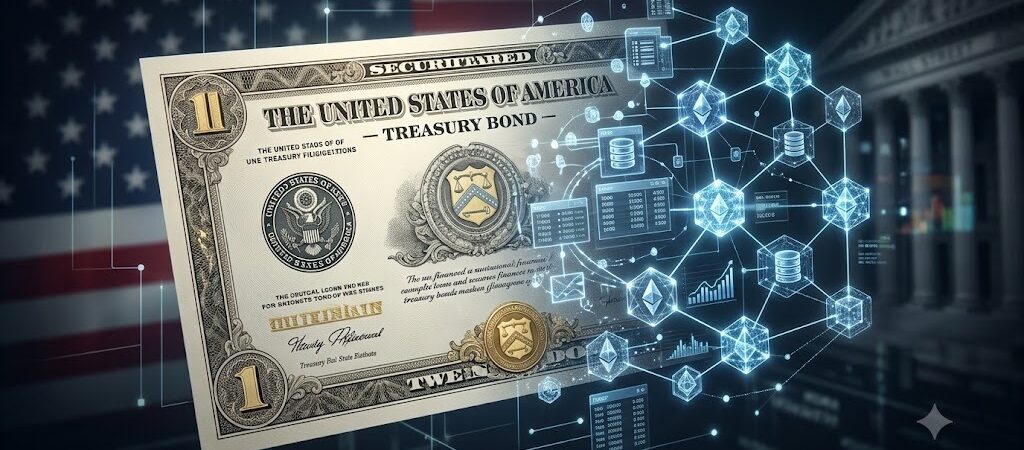
Once viewed primarily as instruments for banks, governments, and institutional investors, U.S. Treasury securities are increasingly becoming part of the digital-asset ecosystem. Through tokenization, financial firms can represent ownership or economic exposure to traditional securities on blockchain networks, potentially allowing these assets to move through digital financial infrastructure alongside stablecoins and other crypto assets.
The trend is attracting attention because it addresses one of crypto’s biggest challenges: how to generate relatively stable, yield-bearing returns without completely leaving the blockchain environment.
Instead of holding only volatile cryptocurrencies during uncertain market conditions, investors and institutions can potentially use blockchain-based Treasury products as a more conservative component of a digital-asset portfolio. tokenized U.S. Treasuries At the same time, tokenized Treasuries can provide the crypto industry with a bridge to traditional capital markets.
But does that make them the new safe haven for crypto investors?
Not necessarily.
Tokenization changes how an asset is issued, represented, transferred, and accessed. It does not eliminate the risks associated with the underlying security, issuer, custody arrangements, smart contracts, regulations, or blockchain infrastructure itself.
That distinction will become increasingly important as tokenized real-world assets move from an experimental niche toward a more established part of global finance. https://cryptopulsemagazine.com/what-is-bitcoin/
What Are Tokenized U.S. Treasuries?
Tokenized U.S. Treasuries are blockchain-based digital representations of investment exposure to U.S. government securities.
The underlying assets can include Treasury bills, notes, bonds, or funds that invest in government securities. tokenized U.S. Treasuries Instead of interacting with those investments exclusively through traditional financial systems, eligible investors can hold a digital token connected to the underlying investment structure.
The token itself does not magically transform a Treasury security into a cryptocurrency.
Rather, blockchain technology becomes an additional layer through which ownership, economic rights, transfers, and other financial functions can be managed.
This distinction is important.
A tokenized Treasury product can combine two different worlds:
- Traditional securities and financial institutions
- Blockchain-based digital infrastructure
The traditional side can handle asset custody, portfolio management, legal ownership, compliance, and reporting. tokenized U.S. Treasuries The blockchain side can provide digital records, programmable transactions, and potentially more efficient settlement.
This hybrid model is one of the main reasons tokenized Treasuries are attracting institutional attention.
How Does Treasury Tokenization Work?
Although structures differ between products, the basic process is relatively straightforward.
An asset manager or financial institution first acquires the underlying securities and establishes an appropriate legal and custody structure.
A digital token is then issued on a blockchain to represent an interest in the relevant investment vehicle or financial arrangement.
Eligible investors can acquire those tokens according to the product’s rules.
The blockchain records token ownership and transfers, while the traditional financial infrastructure continues to manage the underlying assets.
This means investors should not assume that the blockchain replaces every traditional financial intermediary.
In many cases, banks, custodians, asset managers, administrators, legal entities, and compliance providers remain essential.
The blockchain becomes an additional layer of financial infrastructure rather than a complete replacement for the existing system.
Why U.S. Treasuries Are Attractive for Tokenization
U.S. Treasury securities are particularly attractive candidates for tokenization because they are already among the most widely recognized financial assets in the global market.
They have established pricing mechanisms, enormous institutional demand, standardized structures, tokenized U.S. Treasuries and deep traditional financial infrastructure.
This gives tokenization a familiar foundation.
Real estate, private companies, and other real-world assets can involve complicated valuations, ownership structures, legal agreements, and limited liquidity.
Treasury securities generally have fewer of these complications.
That makes them a logical starting point for institutions experimenting with blockchain-based financial products.
If Treasury tokenization proves successful, the same infrastructure could potentially be extended to other asset classes.
The Institutional Shift
One of the strongest signals that tokenized Treasuries are becoming more important is the participation of major financial institutions.
Large asset managers and financial companies are increasingly exploring blockchain-based funds and tokenized financial products.
This represents a major change from the early years of cryptocurrency.
Blockchain technology was once primarily associated with decentralized currencies and speculative digital assets. tokenized U.S. Treasuries Today, established financial institutions are exploring how the same technology can modernize traditional markets.
Products connected to Treasury securities provide a relatively conservative environment for testing that technology.
Institutions can experiment with digital ownership, blockchain settlement, and programmable financial assets while maintaining connections to familiar financial structures. https://cryptopulsemagazine.com/ethereum-price-prediction-2028/
BlackRock and Institutional Tokenization
BlackRock’s BUIDL fund has become one of the most visible examples of institutional tokenization.
The fund provides a blockchain-based structure connected to traditional assets including U.S. Treasury bills and cash.
Its importance extends beyond the individual product.
The development demonstrates that blockchain technology can be incorporated into the operations of a major global asset manager.
This helps shift the conversation around tokenization.
The question is no longer simply whether blockchain can represent traditional assets.
The more important question is how much traditional financial infrastructure could eventually operate through blockchain-based systems.
Franklin Templeton and Digital Money-Market Funds
Franklin Templeton has also played an important role in the development of blockchain-based investment products.
Its blockchain-based money-market fund demonstrates how traditional investment structures can interact with digital networks.
These developments are significant because institutional adoption requires more than technological experimentation.
Financial institutions need legal frameworks, compliance systems, custody arrangements, tokenized U.S. Treasuries investor protections, and operational controls.
Tokenized funds can bring these requirements together with blockchain technology.
This could make them an important bridge between traditional asset management and digital finance.
Why Crypto Investors Are Interested
The attraction for crypto investors is straightforward.
Cryptocurrencies can offer significant growth potential, but they can also experience extreme volatility.
Bitcoin and other major digital assets can decline sharply during periods of market stress.
Crypto investors therefore often look for ways to manage risk without completely abandoning digital financial infrastructure.
Tokenized Treasuries could potentially provide an alternative.
An investor may be able to move part of a digital-asset portfolio into a Treasury-linked product rather than converting everything into traditional bank deposits or leaving the crypto ecosystem entirely.
This could create a new defensive layer within digital portfolios.
However, investors should not interpret this as a guarantee of safety.
The tokenized structure introduces additional risks that do not disappear simply because the underlying securities are government debt. https://cryptopulsemagazine.com/what-are-stablecoins-used-for/
Tokenized Treasuries vs. Bitcoin
Bitcoin and tokenized Treasuries represent fundamentally different types of assets.
Bitcoin is a decentralized digital asset whose value is influenced by supply, demand, adoption, liquidity, tokenized U.S. Treasuries market sentiment, and expectations about its future role in the global financial system.
A Treasury-backed product, by contrast, derives its economic characteristics from government securities or funds holding them.
Bitcoin can experience substantial price volatility.
Treasury securities generally have a different risk and return profile.
For this reason, the two assets could potentially complement each other rather than compete directly.
Bitcoin could represent higher-risk digital-asset exposure, tokenized U.S. Treasuries while tokenized Treasuries could provide a more conservative component.
This kind of diversification may become increasingly important as crypto portfolios mature.
Tokenized Treasuries vs. Stablecoins
Stablecoins require a different comparison.
Stablecoins are designed primarily to maintain a stable value relative to a reference currency, most commonly the U.S. dollar.
They are widely used for trading, payments, transfers, and settlement within digital markets.
Tokenized Treasury products are investment instruments.
They are connected to government securities and can potentially provide income generated by those underlying investments.
This creates a useful distinction:
Stablecoins can function as digital cash.
Tokenized Treasuries can function as digital investment assets.
The two could eventually operate together. tokenized U.S. Treasuries.
An investor could potentially use stablecoins for immediate liquidity while allocating longer-term capital to Treasury-backed digital products. https://cryptopulsemagazine.com/defi-beginners-guide/
The Yield Advantage
One of the strongest arguments for tokenized Treasuries is access to traditional fixed-income returns within blockchain infrastructure.
Crypto investors have historically searched for yield through staking, lending, liquidity provision, and other decentralized-finance strategies.
Those approaches can generate attractive returns, but they also involve protocol, smart-contract, market, and counterparty risks.
Treasury-linked products offer a different source of potential income.
Their returns are connected to the underlying government securities rather than depending entirely on incentives created by a crypto protocol.
This distinction matters.
Investors should not evaluate yield solely by looking at the percentage being offered.
They should ask:
Where does the yield come from?
A return generated by short-term government securities has a fundamentally different risk structure from a return generated through leverage or complex DeFi strategies.
Tokenized Treasuries as Digital Collateral
Collateral could become one of the most important long-term use cases for tokenized government securities.
Traditional financial markets depend heavily on collateral.
Banks, trading firms, hedge funds, and other institutions use high-quality assets to secure financing and other transactions.
In digital financial markets, crypto assets have traditionally played much of this role.
tokenized U.S. Treasuries Treasuries could expand the range of assets available as digital collateral.
A Treasury-backed token could potentially be used in an approved lending or settlement system while remaining connected to the underlying government securities.
This could create a new category of digital collateral with a different risk profile from cryptocurrencies.
However, legal enforceability and regulatory approval would be essential.
Technology alone cannot determine whether an asset qualifies as acceptable collateral.
The Opportunity for DeFi
The integration of tokenized Treasuries with decentralized finance could create another major area of development.
DeFi applications allow financial activities such as lending, borrowing, trading, tokenized U.S. Treasuries and asset management to be performed through blockchain-based systems.
Historically, many DeFi applications have relied heavily on crypto-native assets.
Tokenized Treasuries could introduce traditional government-security exposure into this ecosystem.
Potential applications could include:
- Treasury-backed collateral
- Digital lending
- Automated portfolio strategies
- Treasury-linked investment products
- Institutional settlement
- On-chain cash management
However, tokenized securities often have investor eligibility and transfer restrictions.
Therefore, the future of Treasury-based DeFi may be more regulated than the permissionless DeFi systems associated with the earliest crypto applications.
The Risks Investors Need to Understand
The phrase “Treasury-backed” can create an impression of complete safety.
That would be misleading.
Tokenized Treasury products combine traditional financial assets with digital infrastructure, tokenized U.S. Treasuries meaning investors can face risks from both systems.
Smart-Contract Risk
Smart contracts are software.
They can contain vulnerabilities, bugs, or unexpected interactions.
A technical failure could affect how tokens are issued, transferred, redeemed, or used in other applications.
Strong audits, testing, monitoring, and security controls are therefore essential.
Custody Risk
The underlying securities must be held safely.
Investors need to know who controls the Treasury assets and how those assets are legally separated from other property.
They should also understand what happens if the issuer or another service provider becomes insolvent.
Issuer Risk
A tokenized Treasury product can depend on an asset manager, fund, issuer, or legal entity.
The token may represent an interest in a particular investment structure rather than direct ownership of an individual Treasury security.
The issuer’s legal framework therefore matters.
Liquidity Risk
Blockchain transferability does not automatically create market liquidity.
A token can move between wallets while still having relatively few buyers and sellers.
Investors should understand how the product can actually be sold or redeemed.
Regulatory Risk
Tokenized securities operate at the intersection of securities regulation and digital-asset regulation.
Rules can affect who is eligible to invest, how tokens can be transferred, how products are marketed, tokenized U.S. Treasuries and what disclosures are required.
Regulatory changes could therefore have a major impact on the market.
Blockchain Risk
The blockchain supporting the token also matters.
Network outages, congestion, software upgrades, governance issues, or security incidents could potentially affect token transfers.
The underlying Treasury securities may be stable while the digital infrastructure still faces technical risks.
Why Redemption Matters
Redemption may be one of the most important features of a tokenized Treasury product.
Investors should know exactly how they can exit the investment.
Questions include:
- Can the token be redeemed directly with the issuer?
- How frequently is redemption available?
- Are there minimum redemption amounts?
- Are there fees?
- Are there investor eligibility requirements?
- How long does settlement take?
- What happens during market stress?
These questions can be more important than the blockchain network itself.
A sophisticated token with poor redemption arrangements may not provide the liquidity investors expect.
Transparency: On-Chain and Off-Chain
Blockchain technology can provide transparency because transactions can be recorded on a digital ledger.
But on-chain transparency does not automatically prove that the underlying securities exist or that the investor has a particular legal claim.
Investors need both:
On-chain transparency — information about token transactions and blockchain activity.
Off-chain transparency — information about asset holdings, custody, legal rights, valuation, fees, tokenized U.S. Treasuries and issuer structure.
A strong tokenized Treasury ecosystem needs both layers.
Interest-Rate Risk Still Exists
tokenized U.S. Treasuries does not eliminate traditional bond-market risks.
Treasury securities can be affected by changes in interest rates.
The impact depends partly on the maturity and duration of the underlying securities.
Short-term Treasury bills can behave differently from longer-term government bonds.
Therefore, investors should understand exactly what the tokenized product holds.
A product connected to short-term Treasury bills should not automatically be treated as identical to a product holding longer-duration bonds.
Inflation Risk
Treasuries also face inflation-related considerations.
An investment can generate nominal income while still losing purchasing power if inflation remains elevated.
tokenized U.S. Treasuries Treasury products therefore should not be presented as guaranteed protection against inflation.
Investors need to consider the difference between nominal returns and real purchasing power.
The Legal Structure Matters
One of the biggest differences between cryptocurrencies and tokenized securities is the importance of legal agreements.
With a self-custodied cryptocurrency such as Bitcoin, control of the private keys is central to possession.
With a tokenized U.S. Treasuries Treasury product, the investor’s rights can depend on the legal structure behind the token.
The blockchain records digital ownership, but contracts and applicable laws can determine what that ownership actually means.
This makes legal documentation extremely important.
The Importance of Regulation
Regulation could determine how large the tokenized Treasury market ultimately becomes.
Institutional investors need confidence that tokenized U.S. Treasuries products fit within established securities, custody, compliance, and reporting frameworks.
Clearer regulation could encourage larger financial institutions to participate.
At the same time, excessive complexity could slow innovation.
The challenge for regulators is to protect investors and financial stability while allowing useful technology to develop.
Why Tokenization Does Not Mean Full Decentralization
Another common misconception is that tokenizing a security automatically makes it decentralized.
That is not necessarily true.
A tokenized Treasury can operate on blockchain infrastructure while still depending on:
- Asset managers
- Custodians
- Banks
- Legal entities
- Compliance providers
- Regulators
- Administrators
The blockchain may decentralize certain aspects of recordkeeping or settlement without removing traditional institutions.
The future is therefore more likely to be hybrid finance than completely decentralized finance.
The Growth of Real-World Assets
tokenized U.S. Treasuries Treasuries are part of a much broader movement known as real-world asset tokenization.
The concept involves representing traditional financial or physical assets through blockchain-based tokens.
Potential categories include:
- Government securities
- Corporate bonds
- Private credit
- Real estate
- Commodities
- Investment funds
- Equities
Treasuries could become a gateway asset for this wider market.
If financial institutions successfully establish infrastructure for government securities, that infrastructure could eventually support other types of assets. https://www.coingecko.com/
Why This Could Change Digital Asset Portfolios
The traditional cryptocurrency portfolio has often focused heavily on Bitcoin, Ethereum, stablecoins, and other digital assets.
Tokenization could introduce a broader range of risk profiles.
A future digital portfolio could potentially include:
- Bitcoin for higher-risk digital-asset exposure
- Ethereum for blockchain infrastructure exposure
- Stablecoins for liquidity
- Tokenized Treasuries for conservative income-oriented exposure
- Tokenized bonds for fixed-income diversification
- Other tokenized assets for additional opportunities
This would make digital asset management increasingly similar to traditional portfolio construction.
Tokenized Treasuries and Institutional Cash Management
Large companies and financial institutions manage significant amounts of short-term capital.
They traditionally use bank deposits, money-market funds, Treasury bills, and other instruments.
As blockchain-based payments and digital assets become more common, institutions may want their cash-management systems to interact with digital infrastructure.
tokenized U.S. Treasuries Treasury products could potentially provide a bridge.
An institution could eventually manage digital cash and Treasury exposure through interconnected blockchain-based systems.
This could become particularly useful for companies operating increasingly digital or global financial operations.
The Importance of Interoperability
The tokenized U.S. Treasuries financial market could become fragmented if different institutions use incompatible blockchain networks.
A Treasury token on one network may not automatically function on another.
Interoperability will therefore be critical.
Financial institutions will likely want secure methods of connecting different blockchain networks and financial systems.
The market may eventually develop standards that allow approved tokenized U.S. Treasuries assets to move between compatible environments.
This could improve liquidity and reduce fragmentation.
Could Tokenized Treasuries Become the New Safe Haven?
The answer requires nuance.
tokenized U.S. Treasuries Treasuries have characteristics that make them attractive as a defensive component of a digital portfolio.
They can provide exposure to government securities.
They can potentially generate income.
They can operate within blockchain infrastructure.
They may diversify portfolios dominated by volatile cryptocurrencies.
Institutional participation could also improve infrastructure and credibility.
But they are not risk-free.
The tokenization process adds layers involving technology, custody, issuer structure, liquidity, and regulation.
Therefore, it is more accurate to describe tokenized Treasuries as potential defensive assets within the digital financial ecosystem rather than guaranteed safe havens.
What Could Drive Future Growth?
Several developments could determine whether tokenized U.S. Treasuries Treasuries become mainstream.
Institutional Adoption
Continued participation from major asset managers, banks, and financial institutions could accelerate growth.
Regulatory Clarity
Clear rules could make it easier for institutions and investors to participate.
Better Liquidity
Deep secondary markets and reliable redemption mechanisms would increase usefulness.
Improved Blockchain Infrastructure
More secure, scalable, and interoperable networks could support larger financial markets.
Stablecoin Adoption
Growing digital-dollar activity could create additional demand for Treasury-linked assets.
Institutional DeFi
If regulated Treasury tokens can interact with digital lending and collateral systems, their utility could expand significantly.
Investor Education
Clear explanations of risks and legal structures could help prevent unrealistic expectations.
The Future Could Be Hybrid
The most realistic future is probably not a complete replacement of traditional finance.
Instead, financial markets could become increasingly hybrid.
Traditional institutions may continue to provide custody, asset management, compliance, and legal structures.
Blockchain networks may provide digital settlement and programmable transfers.
Stablecoins may provide digital liquidity.
tokenized U.S. Treasuries Treasuries may provide government-security exposure.
DeFi applications may provide new forms of financial interaction.
Each part could perform a different function.
This hybrid approach could be more practical than trying to replace the entire financial system.
A New Digital Financial Ecosystem
If tokenization continues to expand, the word “crypto” itself may eventually become too narrow to describe the industry.
The broader ecosystem could include:
- Cryptocurrencies
- Stablecoins
- Tokenized government securities
- Tokenized funds
- Digital bonds
- Private-credit tokens
- Tokenized equities
- DeFi
- Blockchain-based payments
- Institutional digital assets
tokenized U.S. Treasuries Treasuries are important because they connect traditional financial markets to this digital ecosystem.
They demonstrate that blockchain technology can be used to represent assets that existed long before cryptocurrency.
What Investors Should Check Before Buying
Before purchasing any tokenized U.S. Treasuries Treasury product, investors should carefully review the structure.
Important questions include:
What exactly does the token represent?
Is it a fund interest, security, beneficial interest, or another financial claim?
What assets back it?
Are the underlying assets Treasury bills, longer-duration bonds, cash, or a money-market fund?
Who manages the assets?
Investors should understand the responsibilities of the issuer and asset manager.
Who holds the underlying securities?
Custody arrangements are critical.
How does redemption work?
Investors should know how and when they can exit.
Who is eligible to hold the token?
Restrictions can affect liquidity.
What blockchain is being used?
Network security and reliability matter.
What fees apply?
Fees can reduce net returns.
What happens if the issuer fails?
Investors should understand the legal protections and contingency arrangements.
These questions can help investors distinguish between carefully structured products and offerings that rely primarily on the appeal of tokenization. https://www.antier.com/
The Bigger Picture
The most important aspect of tokenized U.S. Treasuries Treasuries may not be the Treasury itself.
It is what the technology could enable next.
If government securities can successfully operate on blockchain infrastructure, other traditional assets may follow.
That could lead to a world in which bonds, funds, private credit, equities, and other financial instruments can be represented digitally and interact with programmable financial applications.
This would change how financial markets operate.
The transformation would not happen overnight, and it would not eliminate traditional institutions.
Instead, it could gradually modernize the infrastructure supporting global finance.
Conclusion
Tokenized U.S. Treasuries are becoming an important part of the convergence between traditional finance and cryptocurrency.
They offer a potentially powerful combination: established government securities paired with blockchain-based digital infrastructure.
For crypto investors, this could provide a new way to diversify portfolios, access potential fixed-income returns, and remain within a digital financial ecosystem during periods of market uncertainty.
But tokenized Treasuries should not be confused with risk-free investments.
The underlying securities still face interest-rate and inflation considerations, while the tokenized structure introduces additional risks involving issuers, custody, liquidity, smart contracts, blockchain networks, regulation, and legal rights.
The strongest products will therefore be those that combine transparent asset backing with reliable custody, clear redemption mechanisms, strong security, regulatory compliance, and sufficient liquidity.
The broader opportunity is even larger.
tokenized U.S. Treasuries Treasuries could become a gateway to the tokenization of other real-world assets and a foundation for a more sophisticated digital capital market.
Stablecoins could provide digital liquidity.
Bitcoin and other cryptocurrencies could provide higher-risk digital-asset exposure.
tokenized U.S. Treasuries government securities could provide a more conservative layer.
tokenized U.S. Treasuries bonds, funds, private credit, and equities could expand the investment universe further.
This would create a financial ecosystem that is neither purely traditional nor purely decentralized.
It would be hybrid finance — traditional financial assets operating through increasingly digital infrastructure.
So, are tokenized U.S. Treasuries the new safe haven for crypto investors?
The most responsible answer is: they could become an important defensive asset, but they are not a guaranteed safe haven.
Their long-term importance will depend on whether the industry can combine blockchain’s efficiency and programmability with the transparency, legal protections, liquidity, and institutional standards expected from traditional financial markets.
If that balance is achieved, tokenized U.S. Treasuries Treasuries could become much more than another crypto investment product.
They could become one of the foundational building blocks of the next generation of global finance.
The future may not be traditional finance versus crypto.
It may be traditional finance on blockchain infrastructure.
And tokenized U.S. Treasuries could be one of the clearest signs that this future is already beginning.