Latest posts
Account Abstraction Explained: How Smart Wallets Could Transform Crypto

Introduction: The Evolution of Crypto Wallets Crypto wallets have come a long way since the earliest days of blockchain networks. What began as a relatively simple way to hold private keys and send digital assets has evolved into an increasingly important part of the Web3 experience. Today, a wallet can interact with decentralized applications, approve…
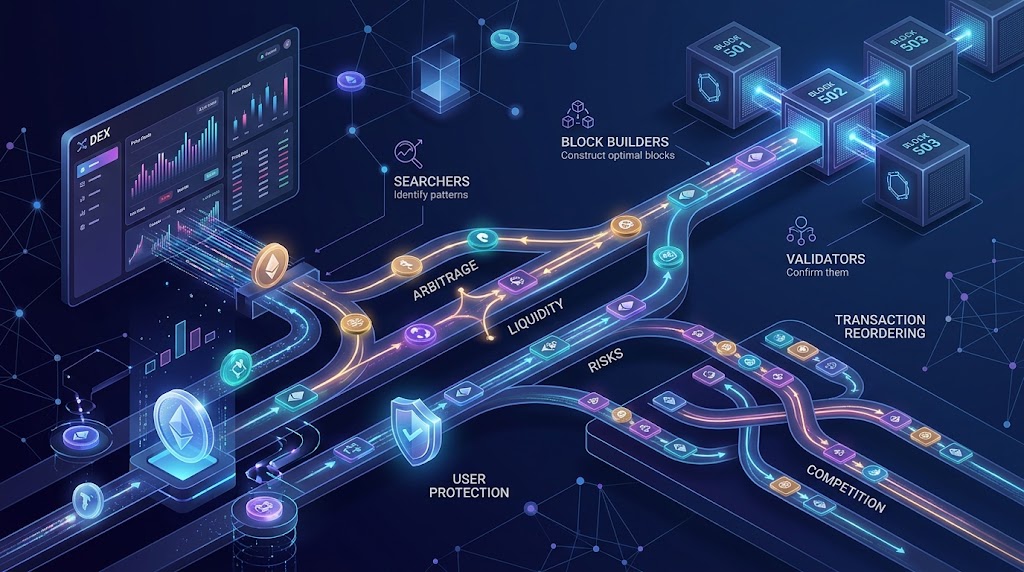
MEV in Crypto: How Transaction Ordering Creates Opportunities and Risks
Introduction Blockchain networks are often described as transparent and predictable systems where transactions are processed according to clear rules. Yet beneath that simplicity is a complex market for transaction inclusion and ordering. The sequence in which transactions are processed can sometimes create significant economic advantages for certain participants. This phenomenon is known as Maximal Extractable…
The Rise of Real-World Asset (RWA) Tokenization: From Treasury Bills to Real Estate
Introduction — The Rise of RWA Tokenization What Is DeFi? Decentralized finance (DeFi) is a blockchain-based financial ecosystem that allows people to access services such as lending, borrowing, trading, and earning yield without relying entirely on traditional financial intermediaries. Real-world assets, commonly known as RWAs, include a wide range of traditional financial and physical assets…
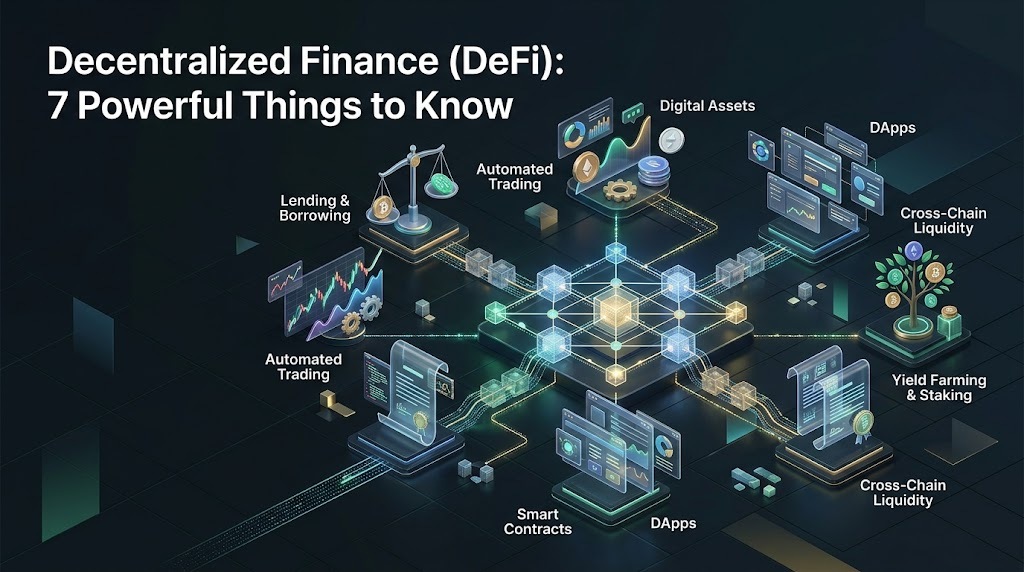
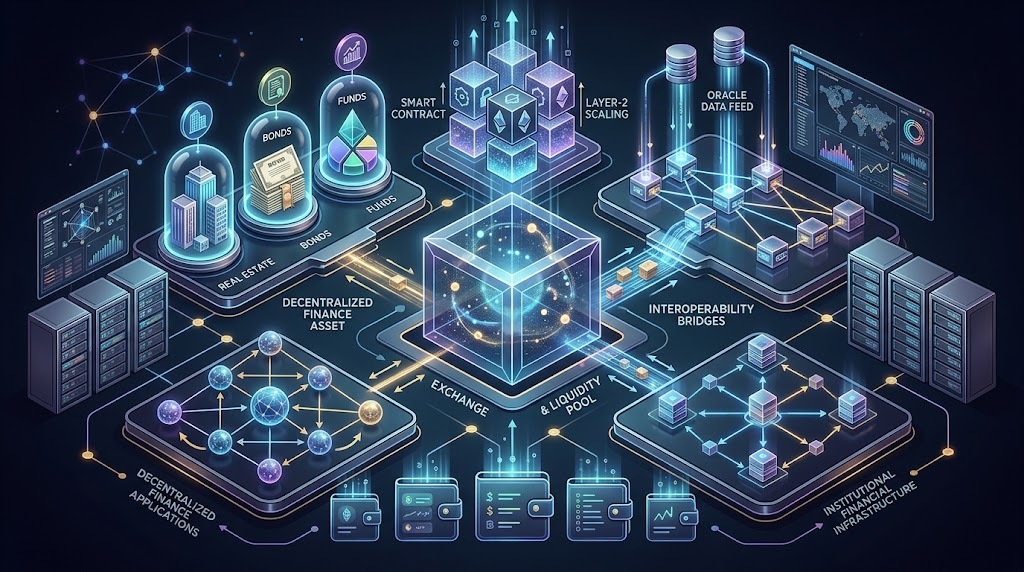
DeFi, Tokenization & Web3 Infrastructure: 7 Key Trends Shaping the Future of Finance
Introduction — Why DeFi, Tokenization & Web3 Infrastructure Matter Decentralized finance, asset tokenization, and Web3 infrastructure are becoming increasingly connected parts of the evolving digital financial system. What began largely as experimentation around cryptocurrencies and decentralized applications is expanding toward a broader infrastructure layer for payments, markets, asset management, settlement, and financial services. In 2026,…
Smart Money Tracking: Following Wallet Movements on Layer-2 Networks
Introduction — Why Smart Money Tracking Matters on Layer-2 Networks The cryptocurrency market is becoming increasingly complex as activity moves beyond traditional Layer-1 blockchains. Ethereum remains one of the most important networks in the digital-asset ecosystem, but Layer-2 networks such as Arbitrum, Optimism, Base, and other scaling solutions now process significant amounts of transactions and…
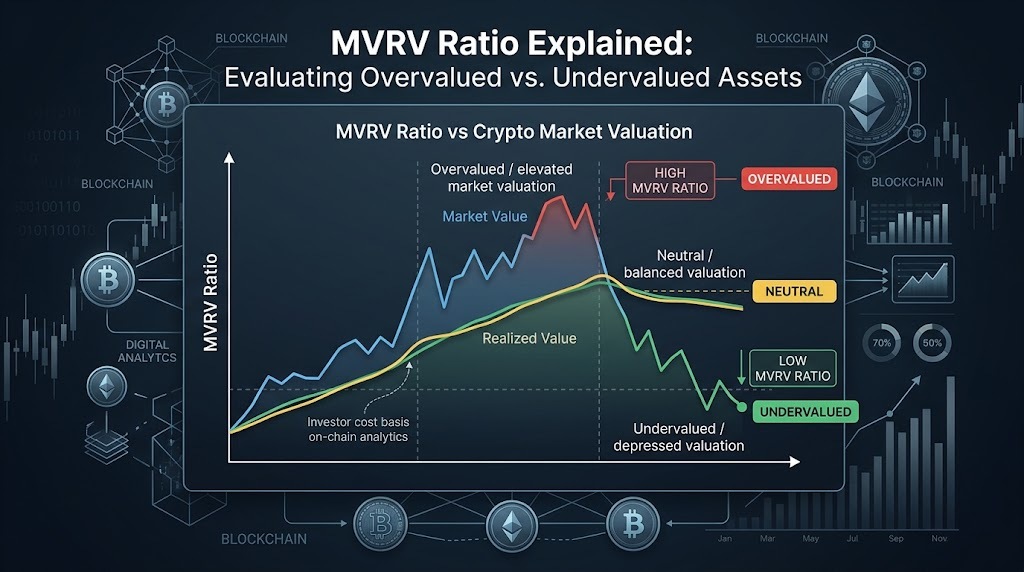
MVRV Ratio Explained: Evaluating Overvalued vs. Undervalued Assets
Introduction — Understanding the MVRV Ratio Cryptocurrency markets are known for their rapid price movements, sharp rallies, and sudden corrections. While traditional investors often rely on earnings, cash flow, interest rates, and economic indicators to evaluate assets, crypto investors have access to another powerful source of information: on-chain data. One of the most widely followed…
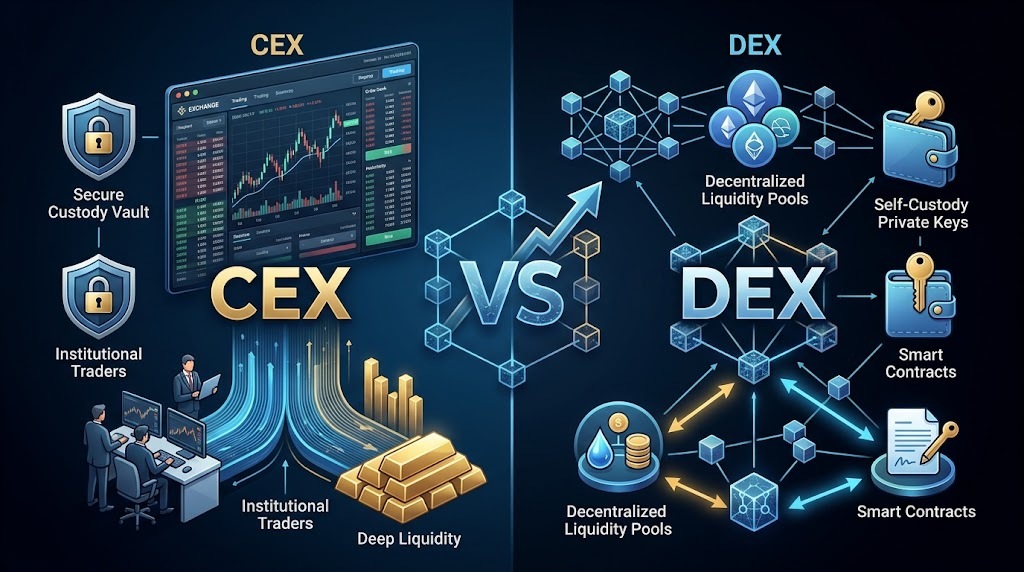
The Future of Crypto Exchanges: CEX vs. DEX Dominance in the Next Bull Cycle
Introduction: 1. The Exchange Battle Entering a New Era Crypto exchanges have always been at the center of digital-asset markets. Whether investors are buying Bitcoin, trading Ethereum, searching for emerging altcoins, or managing sophisticated derivatives positions, exchanges provide the infrastructure that connects market participants with liquidity. For most of crypto’s history, centralized exchanges (CEXs) have…
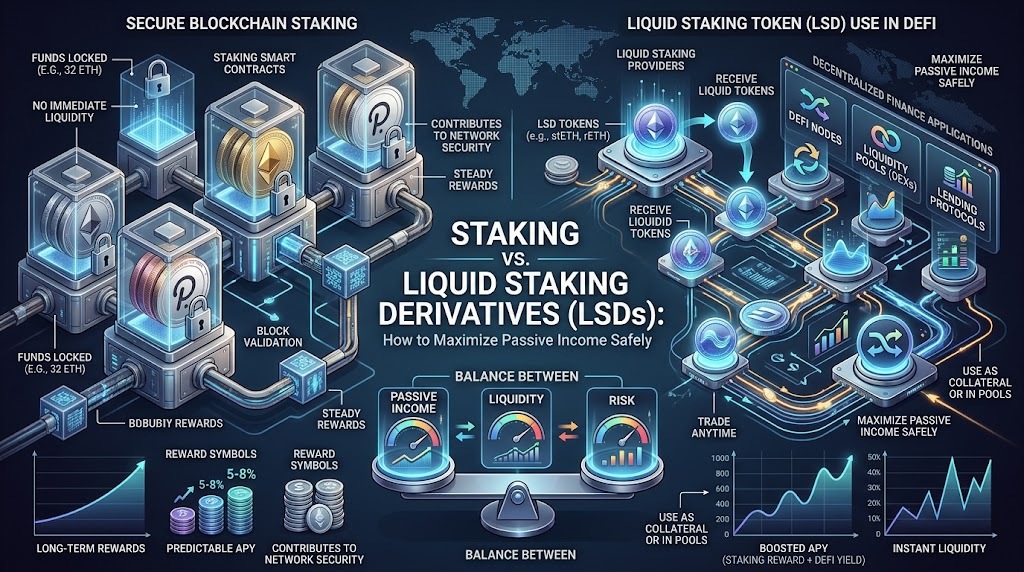
Staking vs. Liquid Staking Derivatives (LSDs): How to Maximize Passive Income Safely
Introduction: Staking Enters a More Flexible Era Cryptocurrency staking has evolved from a relatively simple way to support Proof-of-Stake networks into a major component of the broader decentralized finance (DeFi) ecosystem. Instead of relying on energy-intensive mining, Proof-of-Stake blockchains allow users to commit their assets to network security and potentially earn rewards in return. Ethereum,…
Interoperability Breakthroughs: How Cross-Chain Bridges Are Eliminating Asset Fragmentation
Introduction: Breaking the Blockchain Fragmentation Problem Cross-chain interoperability is becoming one of the most important developments in blockchain infrastructure. As the number of blockchain networks continues to grow, assets, liquidity, applications, and users are increasingly distributed across different ecosystems. Cross-chain bridges are emerging as a critical technology for connecting these networks and reducing asset fragmentation.…
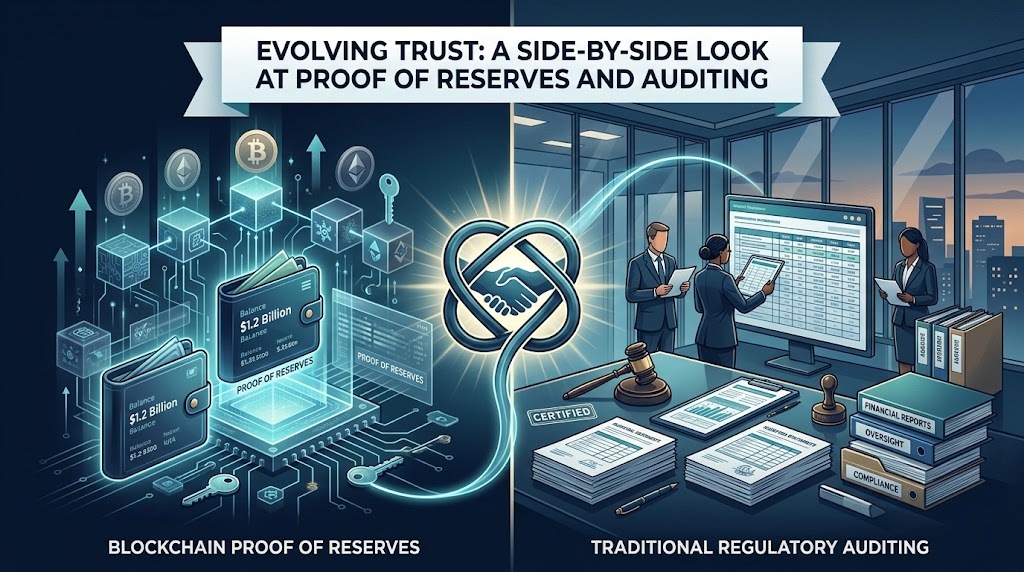
Proof of Reserves vs. Regulatory Audits: Building Trust in Post-Exchange Finance
Introduction: Proof of Reserves vs. Regulatory Audits: Building Trust in Post-Exchange Finance Proof of Reserves vs Regulatory Audits has become an important debate as digital assets move deeper into institutional finance. After major failures across the crypto industry, investors, customers, regulators, and financial institutions increasingly want stronger evidence that digital-asset platforms can protect customer funds…