Introduction — Why Smart Money Tracking Matters on Layer-2 Networks
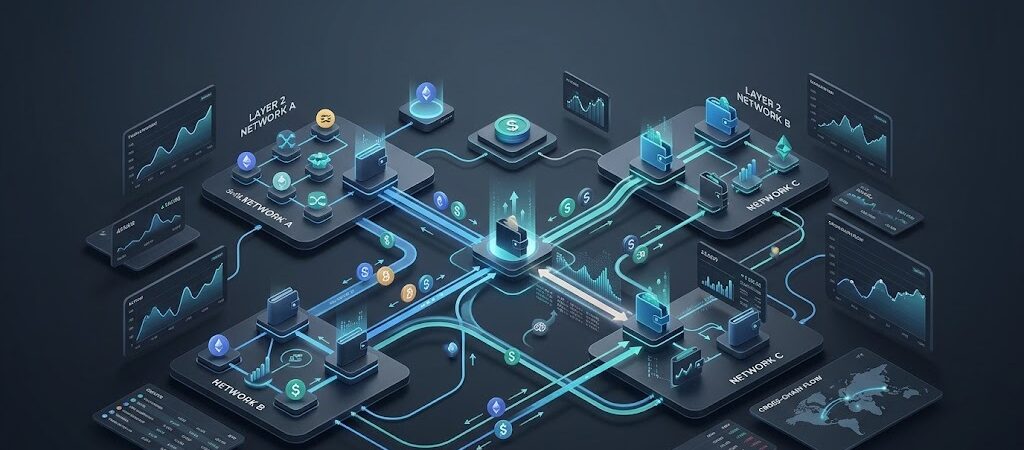
The cryptocurrency market is becoming increasingly complex as activity moves beyond traditional Layer-1 blockchains. Ethereum remains one of the most important networks in the digital-asset ecosystem, but Layer-2 networks such as Arbitrum, Optimism, Base, and other scaling solutions now process significant amounts of transactions and capital.
This shift has created a new challenge for investors and on-chain analysts: How can you identify where experienced market participants are moving their capital before those movements become obvious to the broader market?
This is where Smart Money Tracking becomes useful.
Smart Money Tracking involves monitoring the activity of wallets that appear to have demonstrated strong market knowledge, successful trading behavior, early participation in emerging protocols, or significant involvement in particular sectors. Instead of looking only at token prices and trading volume, analysts can examine blockchain data to see what certain wallets are buying, selling, transferring, staking, or interacting with.
On Layer-2 networks, this analysis can become particularly interesting because transactions are generally faster and cheaper than conducting the same activity directly on Ethereum’s mainnet. Lower transaction costs can encourage users, traders, liquidity providers, and decentralized applications to move more activity onto these networks.
However, following wallet movements is not as simple as finding a large wallet and copying every transaction it makes. A wallet may belong to an individual trader, an investment fund, a protocol, a market maker, an exchange, or even an automated system. Some wallets also interact with multiple contracts for operational reasons rather than because they are making an investment decision.
Therefore, effective Smart Money Tracking requires context, verification, and disciplined interpretation.
What Is Smart Money?
In traditional financial markets, the term “smart money” generally refers to capital controlled by investors or institutions considered experienced, informed, or strategically positioned.
In crypto, the concept is broader.
A smart-money wallet may be identified through patterns such as:
- Consistently profitable trading activity
- Early purchases of tokens that later gained significant value
- Successful participation in new protocols
- Large but strategically timed transactions
- Active involvement in emerging DeFi ecosystems
- Effective liquidity or yield strategies
- Repeatedly identifying opportunities before they become widely known
The important point is that wallet size alone does not make an address smart money.
A large wallet can lose money, while a relatively small wallet can demonstrate highly effective decision-making over time. For this reason, analysts often look at a wallet’s historical behavior rather than relying on its balance alone.
Why Layer-2 Networks Are Important
Layer-2 networks were developed largely to help scale blockchain activity while maintaining a connection to Ethereum’s security and settlement environment.
As Layer-2 ecosystems have expanded, they have developed their own:
- DeFi applications
- Decentralized exchanges
- Lending markets
- Stablecoin activity
- NFT ecosystems
- Gaming applications
- Governance systems
- Token launches
- Liquidity pools
This means that important wallet activity can occur away from Ethereum mainnet.
An investor who monitors only Ethereum’s Layer-1 transactions could therefore miss potentially meaningful activity taking place on Layer-2 networks.
For example, a trader might move assets from Ethereum to a Layer-2 network, accumulate a token through a decentralized exchange, provide liquidity to a protocol, and later transfer profits back to another wallet. Looking only at the final transfer may provide very little information about the strategy.
Tracking the full sequence of wallet activity can provide a much clearer picture.
Smart Money Tracking Is About Behavior, Not Copy Trading
One of the biggest misconceptions surrounding wallet monitoring is that investors can simply copy whatever a successful wallet does.
In reality, blockchain data rarely provides the complete picture.
Suppose a tracked wallet purchases a token worth $500,000. An observer may see the transaction and interpret it as a strong bullish signal. But the observer may not know whether the wallet:
- Purchased the token for long-term investment
- Is providing liquidity
- Is hedging another position
- Is conducting market-making activity
- Is moving assets between its own wallets
- Is executing a strategy involving derivatives
- Is acting on behalf of another entity
The blockchain shows transactions, but interpreting the reason behind those transactions requires additional analysis.
That is why Smart Money Tracking should be treated as an analytical tool, not a guaranteed trading strategy.
What Wallet Movements Can Reveal
Despite these limitations, wallet activity can provide valuable information.
Analysts can monitor several types of movements, including:
Accumulation:
A wallet repeatedly purchases an asset over a period of time. Consistent accumulation can be more informative than a single large purchase.
Distribution:
A wallet begins reducing its holdings or transferring assets toward exchanges or other destinations. This may indicate profit-taking, portfolio rebalancing, or another strategic decision.
Rotation:
Capital moves from one token or sector into another. For example, a wallet may reduce exposure to one DeFi project while increasing exposure to another ecosystem.
Bridge activity:
Assets move between Ethereum and Layer-2 networks. This can help analysts understand where capital is becoming more active.
Protocol interaction:
A wallet begins interacting with a new decentralized application, lending protocol, decentralized exchange, or liquidity pool.
Stablecoin movement:
Large transfers of stablecoins can sometimes indicate that capital is preparing for future deployment, although stablecoin transfers can also have many operational explanations.
These signals become more useful when examined together rather than individually.
The Difference Between a Whale and Smart Money
A whale generally refers to a wallet or entity holding a large amount of cryptocurrency.
Smart money refers more to behavior and historical performance.
The two categories can overlap, but they are not identical.
A whale might hold a large amount of ETH because it is an exchange, custodian, institutional entity, or early investor. That does not necessarily mean every movement from that wallet represents a new investment thesis.
Conversely, a smaller wallet may have a strong history of identifying promising projects early.
This distinction is critical for anyone building a wallet-monitoring strategy.
The objective is not simply to ask:
“Which wallets have the most money?”
A better question is:
“Which wallets have demonstrated useful and repeatable behavior, and what are they doing now?”
That change in perspective makes Smart Money Tracking much more meaningful.
Why Layer-2 Wallet Analysis Can Be Different
Layer-2 networks introduce another analytical dimension because activity can be fragmented across multiple ecosystems.
The same investor may use:
- Ethereum mainnet
- Arbitrum
- Optimism
- Base
- Other Layer-2 or scaling networks
A single wallet address may therefore not represent the investor’s entire portfolio.
An analyst who tracks only one chain may see an incomplete picture of capital movements.
For example, a wallet might appear to sell a token on one network while simultaneously acquiring the same or a related asset on another network. Without cross-chain context, that activity could be interpreted incorrectly.
This is why serious wallet analysis increasingly requires analysts to think in terms of entities, addresses, chains, bridges, and transaction patterns rather than treating every blockchain address as an independent investor.
A New Way to Read On-Chain Market Activity
Price charts tell investors what the market has already done.
On-chain wallet analysis can sometimes provide additional clues about what market participants are doing beneath the surface.
Smart Money Tracking brings these two perspectives together.
Instead of relying exclusively on price movements, investors can examine wallet behavior, transaction history, token flows, protocol interactions, and changes in capital allocation.
The result is not a crystal ball. Blockchain activity cannot reliably predict every future price movement.
But when used carefully, wallet data can provide another layer of information for understanding how capital is moving through increasingly interconnected Layer-2 ecosystems.
How Smart Money Tracking Works on Layer-2 Networks
Smart Money Tracking begins with a simple idea: blockchain transactions are publicly recorded, allowing analysts to study how assets move between wallets and decentralized applications.
Unlike traditional financial markets, where investors generally cannot see the complete transaction history of another participant, public blockchains provide a transparent record of on-chain activity. Analysts can use this information to identify patterns in wallet behavior and investigate how capital moves through different ecosystems.
However, transparency does not automatically mean clarity.
A blockchain address is usually represented by a long string of letters and numbers rather than a person’s name. Determining what that address represents—and whether its activity is actually meaningful—is one of the most important parts of wallet analysis.
1. Finding Potential Smart-Money Wallets
The first step is identifying wallets worth monitoring.
There is no universal definition of a smart-money wallet. Different analysts may use different criteria depending on the market or strategy they are studying.
Potential signals include:
- Strong historical trading performance
- Early participation in successful projects
- Consistent profitability across multiple trades
- Large and well-timed token accumulations
- Repeated activity in successful DeFi protocols
- Significant liquidity positions
- Early movement into emerging sectors
- Long-term experience across multiple market cycles
Historical performance is particularly important.
A wallet that made one successful trade may simply have been lucky. A wallet that repeatedly identifies opportunities across different market conditions provides a stronger basis for further investigation.
This means analysts should focus on patterns rather than isolated transactions.
2. Understanding Wallet Labels
Wallet labeling can make blockchain analysis considerably easier.
Some analytics platforms maintain databases that associate addresses with known entities or categories. A wallet might be identified as an exchange, protocol, fund, market maker, bridge, foundation, or other type of entity.
Labels can provide important context.
For example, a large transfer from a known exchange wallet should not automatically be interpreted as an individual investor buying or selling. Similarly, a transfer involving a bridge contract may represent cross-chain movement rather than a conventional investment transaction.
When analyzing an address, the first question should therefore be:
What type of wallet is this?
Only after understanding the wallet’s likely role should analysts begin interpreting its transactions.
3. Examining Transaction History
Once a potentially interesting wallet has been identified, the next step is examining its transaction history.
Analysts can look for:
- Token purchases
- Token sales
- Transfers between wallets
- Stablecoin movements
- Bridge transactions
- DeFi deposits
- DeFi withdrawals
- Liquidity provision
- Lending activity
- Borrowing activity
- Staking interactions
- Smart-contract approvals
The goal is to understand the wallet’s behavior over time.
A single transaction provides limited information. A sequence of related transactions can reveal considerably more.
For example, consider a hypothetical wallet that:
- Bridges stablecoins onto a Layer-2 network.
- Purchases a relatively small-cap token.
- Adds liquidity to a decentralized exchange.
- Holds the position for several weeks.
- Reduces its liquidity position.
- Sells part of the token holdings.
The entire sequence tells a much richer story than simply observing the final sale.
4. Tracking Token Flows
Token flows are another important component of Smart Money Tracking.
Analysts can monitor whether a wallet is accumulating or reducing exposure to particular assets.
Accumulation occurs when a wallet consistently increases its holdings.
Distribution occurs when holdings are gradually reduced.
These patterns can sometimes be more useful than a single large transaction.
For instance, a wallet purchasing a token through five transactions over several days may be demonstrating a different strategy from a wallet making one large purchase and immediately transferring the tokens elsewhere.
The timing, frequency, size, and destination of transactions all contribute to the interpretation.
5. Watching Stablecoin Movements
Stablecoins deserve special attention because they frequently serve as the settlement layer for crypto trading and DeFi activity.
A wallet that moves a substantial amount of stablecoins onto a Layer-2 network may be preparing capital for deployment.
However, this should not automatically be interpreted as a bullish signal.
The stablecoins could be intended for:
- Trading
- Lending
- Liquidity provision
- Payments
- Treasury management
- Yield strategies
- Transfers between the user’s own wallets
Context is essential.
A stablecoin transfer becomes more interesting when it is followed by identifiable investment activity.
For example, if a wallet moves USDC onto a Layer-2 network and subsequently uses that capital to accumulate several assets, the combined sequence provides more information than the stablecoin transfer alone.
6. Monitoring Bridge Activity
Layer-2 networks make bridge activity particularly important.
A user may transfer assets from Ethereum to a Layer-2 network to access lower transaction costs, decentralized applications, liquidity, or specific opportunities.
Therefore, analysts should pay attention to movements between:
Ethereum → Layer-2
and
Layer-2 → Ethereum
These flows can help reveal changes in where capital is being deployed.
However, bridge activity should also be interpreted carefully. Moving assets between networks does not necessarily mean that the owner has changed their market outlook.
A trader might simply move capital to the network where a particular application is available or where transaction costs are more efficient.
7. Following Protocol Interactions
Wallet balances alone do not tell the entire story.
Smart Money Tracking becomes more powerful when analysts examine what wallets actually do with their assets.
For example, a wallet might interact with:
- Decentralized exchanges
- Lending protocols
- Perpetual trading platforms
- Liquid staking applications
- Yield protocols
- NFT marketplaces
- Governance contracts
- Cross-chain bridges
Repeated interaction with a particular protocol can provide clues about a wallet’s strategy.
Suppose several historically successful wallets begin interacting with the same new Layer-2 protocol. That does not guarantee the protocol will succeed, but it may justify additional research into its liquidity, tokenomics, users, security, and growth.
8. Comparing Wallets Instead of Following One
Another useful approach is to monitor a group of wallets rather than relying on a single address.
Imagine that ten wallets with strong historical performance are being tracked.
If only one wallet purchases an asset, the signal may be relatively weak.
If several independent wallets begin accumulating the same asset or interacting with the same protocol around a similar period, the activity becomes more interesting.
This approach can help reduce the risk of overreacting to one wallet’s unusual transaction.
It also introduces the concept of wallet consensus.
Wallet consensus does not mean that several addresses are necessarily controlled by different people. Some addresses may belong to the same entity or coordinated system. Therefore, analysts should investigate wallet relationships before treating multiple addresses as independent signals.
9. Looking at Transaction Timing
Timing is another important variable.
Analysts can compare wallet activity with market conditions and token price movements.
For example:
- Did the wallet accumulate before a major price increase?
- Did it reduce exposure after a strong rally?
- Did it enter during a market correction?
- Did it buy after negative news?
- Did it exit before or after a major volatility event?
Historical timing can help determine whether a wallet has demonstrated useful decision-making.
However, past timing does not guarantee future success.
A wallet that performed well during one market regime may perform differently when liquidity, volatility, regulation, or investor sentiment changes.
10. Measuring Position Size
Not every transaction deserves the same level of attention.
A wallet may hold millions of dollars in assets but make a very small purchase of a particular token.
That purchase may not represent a meaningful change in its portfolio.
Analysts should therefore consider the transaction relative to the wallet’s overall holdings.
For example, a $100,000 purchase could be highly significant for a wallet with a $500,000 portfolio but relatively insignificant for an entity managing $100 million.
Position size provides context.
This is one reason why simply ranking wallets by transaction value can produce misleading conclusions.
11. Distinguishing Investment Activity From Operational Transfers
One of the biggest challenges in wallet analysis is determining whether a transaction represents an investment decision.
Wallets frequently move assets for operational reasons.
A transaction could involve:
- Internal treasury management
- Transfers between wallets controlled by the same entity
- Exchange deposits or withdrawals
- Custody arrangements
- Contract interactions
- Liquidity management
- Gas funding
- Automated trading systems
Without understanding these possibilities, analysts can easily mistake routine blockchain activity for a market signal.
Good Smart Money Tracking therefore requires transaction classification, not just transaction observation.
12. Building a Wallet Watchlist
After identifying potentially useful wallets, analysts can create a watchlist.
A practical watchlist might include:
| Wallet | Network | Historical Strength | Main Activity | Current Focus |
|---|---|---|---|---|
| Wallet A | Layer-2 | Early token entries | DeFi | New protocols |
| Wallet B | Layer-2 | Strong trading history | DEX trading | Altcoins |
| Wallet C | Multiple chains | Consistent accumulation | Long-term holdings | Large-cap assets |
| Wallet D | Layer-2 | Successful liquidity strategies | DeFi | Yield opportunities |
The purpose of a watchlist is not to copy every transaction.
Instead, it creates a structured system for observing behavior over time.
Analysts can record when a wallet enters a position, how large the position is, whether it adds or reduces exposure, and how its behavior changes as market conditions evolve.
Smart Money Tracking Requires Multiple Signals
The strongest wallet-analysis framework does not depend on a single metric.
Instead, analysts can combine:
Wallet history + transaction size + timing + token flows + protocol activity + bridge activity + market conditions
When several signals point in the same direction, the information may become more useful.
When the signals conflict, caution is appropriate.
For example, a wallet might accumulate a token while simultaneously moving substantial stablecoins away from the network. Without additional context, it would be difficult to determine whether the wallet is becoming more bullish or simply restructuring its portfolio.
This is why wallet tracking should be viewed as a research process rather than a simple alert system.
The Importance of Verification
Before acting on a wallet signal, analysts should verify the underlying data.
Check:
- Whether the wallet is correctly labeled
- Whether multiple addresses belong to the same entity
- Whether the transaction involves a known protocol
- Whether assets were actually bought or merely transferred
- Whether the wallet’s historical performance is genuine
- Whether the transaction represents a meaningful portfolio change
- Whether broader market conditions support the interpretation
This additional verification can prevent many false conclusions.
Smart Money Tracking is most useful when blockchain data becomes the starting point for deeper research, rather than the only reason for making an investment decision.
Which Layer-2 Networks Matter for Smart Money Tracking?
The growth of Layer-2 networks has changed the way capital moves through the Ethereum ecosystem. Instead of conducting every transaction directly on Ethereum mainnet, users and applications can operate across multiple scaling networks with different communities, applications, liquidity pools, and market opportunities.
For analysts, this creates both an opportunity and a challenge.
The opportunity is that Layer-2 activity can reveal emerging trends at an earlier stage. The challenge is that liquidity and wallet activity are distributed across multiple networks.
Effective Smart Money Tracking therefore requires understanding the characteristics of the major Layer-2 ecosystems and knowing what types of activity deserve attention.
Arbitrum: A Major DeFi Ecosystem
Arbitrum has become one of the most important Layer-2 ecosystems for decentralized finance and on-chain activity.
Its ecosystem includes decentralized exchanges, lending protocols, derivatives platforms, stablecoin markets, and other applications.
For wallet analysts, Arbitrum can provide a broad environment for studying:
- DeFi trading activity
- Token accumulation
- Liquidity movements
- Stablecoin flows
- Lending and borrowing
- Protocol participation
- Cross-chain transfers
One useful approach is to monitor wallets with established histories on Arbitrum and examine whether their behavior changes when new protocols or tokens begin attracting liquidity.
For example, if several experienced wallets begin interacting with a newly launched protocol, an analyst may investigate the project more closely.
That does not mean the protocol will necessarily succeed. Instead, the wallet activity can serve as an early research signal.
Optimism: Tracking Ecosystem and Governance Activity
Optimism represents another major Ethereum scaling ecosystem.
Optimism’s broader ecosystem includes applications, infrastructure, governance-related activity, and other projects operating within the Superchain environment.
For Smart Money Tracking, analysts can pay attention to:
- Movement of capital into the ecosystem
- Activity involving major DeFi applications
- Governance-related transactions
- Token flows
- Stablecoin activity
- Cross-chain movements
- Wallet interactions with emerging applications
The important factor is not simply the number of transactions.
An increase in transaction activity could come from many sources, including users, automated systems, applications, or temporary incentives.
Wallet-level analysis helps separate broader network activity from the behavior of potentially significant participants.
Base: Rapidly Growing On-Chain Activity
Base has developed into another important Layer-2 ecosystem.
Its connection to a major centralized crypto platform has helped make it accessible to a large user base, while its ecosystem has expanded across decentralized finance, social applications, trading, consumer applications, and other categories.
For wallet analysts, Base can be particularly interesting when monitoring the emergence of new tokens and applications.
A useful framework is to watch for combinations of:
New liquidity + experienced wallets + increasing transaction activity + sustained user participation
If these factors appear together, the activity may deserve further investigation.
However, analysts should remain cautious with newly launched tokens. A few large wallets can create the appearance of strong demand even when broader market participation remains limited.
zkSync and Other ZK-Based Ecosystems
Zero-knowledge technology has also become an important part of Ethereum’s scaling landscape.
Networks using zero-knowledge-based scaling approaches can create additional ecosystems for decentralized applications and token activity.
For Smart Money Tracking, analysts can monitor:
- Early ecosystem participation
- Bridge inflows
- DeFi liquidity
- New protocol deployments
- Wallet activity
- Token launches
- Developer and application growth
Early ecosystem activity can sometimes be difficult to interpret because incentives, airdrop expectations, and speculative behavior may influence wallet transactions.
A wallet interacting with many protocols on a new network is not automatically demonstrating a strong investment thesis.
The analyst must determine why the wallet is active.
Why Cross-Layer-2 Tracking Matters
One of the biggest mistakes in wallet analysis is examining each network in isolation.
Capital can move between:
Ethereum → Arbitrum → Base → Ethereum
or through other combinations of networks.
A trader may also maintain different addresses for different strategies.
This means a wallet appearing inactive on one chain may actually be highly active elsewhere.
Cross-chain monitoring can therefore provide a more complete view of capital movement.
For example, suppose a tracked wallet withdraws ETH from one Layer-2 network while simultaneously bridging stablecoins into another. Looking at only the first transaction might suggest that the wallet is reducing exposure to Layer-2 activity.
Looking at the second transaction could reveal that the capital is simply being relocated.
Bridge Inflows as an Early Signal
Bridge activity can provide useful context when capital enters a Layer-2 ecosystem.
An increase in bridge inflows may indicate that users are moving assets into the network.
But analysts should distinguish between capital entering a network and capital being deployed into investments.
Assets can remain idle after bridging.
For example:
Ethereum → Layer-2
does not necessarily mean:
Ethereum → Layer-2 → Token purchase
The second sequence provides much more information about investment activity.
Therefore, bridge data should ideally be combined with decentralized exchange activity, wallet balances, and protocol interactions.
Stablecoin Liquidity Matters
Stablecoins are particularly useful when studying capital deployment.
If a Layer-2 network experiences increasing stablecoin liquidity, it may have more capital available for trading, lending, borrowing, and decentralized applications.
Analysts can monitor:
- Stablecoin inflows
- Stablecoin outflows
- Changes in wallet balances
- Stablecoin trading volume
- Movement between protocols
- Large wallet transfers
However, stablecoin growth should not automatically be interpreted as bullish.
Stablecoins can be used for many purposes, including payments, treasury management, liquidity provision, and temporary capital parking.
The strongest interpretation comes from combining stablecoin movements with actual wallet behavior.
Decentralized Exchange Activity
Decentralized exchanges are another major source of information.
When a wallet repeatedly purchases or sells tokens through decentralized exchanges, analysts can examine:
- Which assets are being traded
- Trade frequency
- Approximate transaction size
- Timing relative to market movements
- Whether positions are being accumulated or distributed
- Whether the wallet returns to the same assets
Repeated activity can reveal more than a single transaction.
For example, a wallet that gradually accumulates an asset through several transactions may be following a deliberate strategy.
A wallet that buys and sells the same token repeatedly within minutes may instead be using an automated or short-term trading strategy.
Those two behaviors should not be treated as equivalent smart-money signals.
Liquidity Pools and DeFi Positions
Wallet tracking should extend beyond simple token purchases.
A sophisticated participant may express a market view through liquidity provision, lending, borrowing, or other DeFi strategies.
For example, a wallet might:
- Deposit stablecoins into a lending protocol.
- Borrow another asset.
- Provide liquidity to a decentralized exchange.
- Adjust the position as market conditions change.
A basic token tracker could miss much of this strategy.
This is why analysts should monitor protocol positions, not just wallet balances.
Watching New Protocols
Emerging Layer-2 protocols can provide another source of information.
When experienced wallets begin interacting with a new application, analysts can investigate:
- What problem the protocol solves
- How much liquidity it has
- Whether users are growing
- Whether activity is organic or incentive-driven
- How concentrated its liquidity is
- Whether smart contracts have been audited
- What risks are associated with the protocol
Wallet activity should therefore be considered an investigative trigger.
It tells analysts where they may want to look more closely.
It does not provide automatic confirmation that an investment is safe or profitable.
Wallet Clusters Can Reveal More Than Individual Addresses
Another advanced technique involves grouping related addresses.
An individual or organization may use several wallets for different purposes.
For example:
- One wallet may hold long-term assets.
- Another may execute trades.
- Another may interact with DeFi protocols.
- Another may receive profits.
- Another may be used for bridging.
If analysts treat each address as a completely independent participant, they may misinterpret the data.
Wallet clustering attempts to identify relationships between addresses based on transaction patterns and other available blockchain evidence.
However, clustering is not perfect.
An apparent relationship does not necessarily prove common ownership, so conclusions should be presented carefully.
Comparing Layer-2 Activity With Ethereum Mainnet
Ethereum mainnet remains an important reference point.
Analysts can compare Layer-2 activity with mainnet activity to understand where capital and users are moving.
For example, an increase in Layer-2 activity alongside declining activity for a particular application on mainnet could indicate migration.
On the other hand, rising activity across both layers could suggest broader ecosystem growth.
This comparative approach can help prevent analysts from interpreting a single network’s growth without considering the wider Ethereum environment.
A Practical Layer-2 Monitoring Framework
A useful daily monitoring framework could look like this:
| Signal | What to Watch | Why It Matters |
|---|---|---|
| Bridge flows | Capital entering or leaving | Shows network-level movement |
| Stablecoins | Changes in liquidity | Indicates available capital |
| DEX activity | Large or repeated trades | Shows trading behavior |
| Wallet balances | Accumulation or distribution | Tracks portfolio changes |
| Protocol interactions | New applications being used | Identifies emerging activity |
| Liquidity positions | Deposits and withdrawals | Reveals DeFi strategies |
| Cross-chain flows | Movement between networks | Provides broader context |
| Wallet clusters | Related addresses | Helps avoid fragmented analysis |
No single signal should be considered decisive.
The objective is to combine several pieces of evidence and build a more complete picture of what is happening.
Layer-2 Networks Create More Data—and More Noise
More networks mean more blockchain data.
That can be an advantage, but it can also create information overload.
An analyst monitoring thousands of wallets across several Layer-2 ecosystems may receive hundreds or thousands of transactions every day.
The solution is not necessarily to monitor everything.
Instead, analysts can establish filters based on:
- Wallet history
- Transaction value
- Asset type
- Protocol
- Network
- Transaction frequency
- Historical profitability
- Portfolio concentration
These filters can turn a large volume of raw blockchain data into a more manageable research process.
The Bigger Picture
Layer-2 networks are becoming important venues for crypto activity, but Smart Money Tracking works best when analysts view them as interconnected parts of a larger ecosystem.
A wallet may move capital across several chains, use multiple protocols, and maintain several addresses.
Therefore, the goal is not simply to identify where a wallet is now.
The deeper objective is to understand how capital is moving, why it may be moving, and whether the behavior is consistent with the wallet’s historical strategy.
Key Smart-Money Signals to Watch
Tracking wallet activity produces a large amount of blockchain data, but not every transaction represents a meaningful investment signal. A large transfer can be routine, while a series of smaller transactions can reveal a deliberate strategy.
For this reason, effective Smart Money Tracking depends on identifying behavioral patterns rather than reacting to individual transactions.
The following signals can help analysts evaluate whether wallet activity deserves further attention.
1. Consistent Accumulation
Accumulation is one of the most closely watched signals in wallet analysis.
It occurs when a wallet gradually increases its exposure to an asset over time.
For example, a wallet might purchase a token several times during a period of market weakness instead of making one large purchase.
This behavior can indicate a deliberate accumulation strategy.
However, accumulation should be examined in context.
Analysts should ask:
- How long has the wallet been accumulating?
- What percentage of its portfolio does the asset represent?
- Is the wallet buying on multiple Layer-2 networks?
- Has the wallet accumulated similar assets in the past?
- Did previous accumulation strategies perform well?
A single purchase is generally weaker evidence than a repeated pattern.
2. Distribution and Profit-Taking
The opposite of accumulation is distribution.
A wallet may begin reducing its holdings after a significant price increase or following a period of strong market performance.
Distribution can occur gradually through multiple sales rather than one large transaction.
This matters because experienced participants may avoid attempting to sell their entire position at once.
For example, a wallet might reduce its exposure by 5% or 10% at several different price levels.
Such behavior could represent profit-taking, risk management, portfolio rebalancing, or simply a change in investment priorities.
Therefore, distribution is a signal to investigate—not proof that a market top has arrived.
3. Early Entry Into New Assets
One characteristic often associated with successful wallets is early participation.
A wallet may enter a project before it becomes widely discussed across social media or mainstream crypto news.
Early activity can be especially interesting in emerging Layer-2 ecosystems where new applications and tokens appear regularly.
However, early does not always mean successful.
Some wallets enter projects that eventually fail.
Therefore, analysts should evaluate a wallet’s historical hit rate, not simply celebrate every early transaction.
A useful question is:
How often has this wallet’s early activity resulted in a meaningful outcome?
4. Wallet Profitability
Historical profitability can help distinguish potentially useful wallets from random active addresses.
Analysts may examine:
- Realized profits
- Unrealized gains
- Winning trades
- Losing trades
- Average holding periods
- Return on individual positions
- Performance across different market conditions
A wallet that consistently generates positive results across multiple trades may deserve more attention than one that has only a single successful investment.
However, profitability data can be complicated.
Different analytics platforms may calculate returns differently, and some wallet activity may be impossible to value accurately because of incomplete cost-basis information.
Therefore, profitability should be treated as an estimate rather than an unquestionable fact.
5. Transaction Timing
Timing can provide important context.
Analysts can compare wallet transactions with:
- Token price movements
- Market volatility
- Major announcements
- Protocol launches
- Liquidity changes
- Broader market trends
Suppose a wallet repeatedly accumulates assets during periods of significant market weakness and reduces exposure during strong rallies.
That pattern may indicate disciplined portfolio management.
On the other hand, a wallet that consistently buys after extreme price increases may be following momentum rather than identifying opportunities early.
Historical timing can therefore help reveal a wallet’s broader strategy.
6. Position Concentration
Another important signal is how concentrated a wallet’s portfolio becomes.
If a wallet gradually increases one asset from 2% of its holdings to 20%, that change may be more meaningful than the absolute dollar value of the purchase.
Portfolio concentration can indicate conviction, although it can also indicate increased risk.
Analysts should consider:
Position size relative to total portfolio value
rather than looking only at transaction size.
This provides a more useful measure of how important a particular asset may be to the wallet.
7. Repeated Interaction With the Same Protocol
A wallet repeatedly returning to the same decentralized application may provide useful clues.
For example, a wallet might regularly:
- Trade on the same decentralized exchange
- Provide liquidity to the same protocol
- Deposit assets into the same lending platform
- Participate in governance
- Use the same derivatives application
Repeated interaction can suggest that the wallet has developed familiarity with a particular ecosystem.
However, it can also reflect automation.
Market makers, bots, and other automated systems can generate extremely high transaction activity.
Therefore, analysts should determine whether the behavior appears discretionary or automated.
8. Cross-Chain Capital Rotation
Capital rotation between Layer-2 networks can be an important signal.
A wallet may reduce activity on one network while increasing activity on another.
For example:
Arbitrum → Base
or
Base → Ethereum
may represent a strategic change in where capital is being deployed.
But cross-chain transfers alone do not reveal the reason.
The analyst should examine what happens after the capital arrives.
If stablecoins move into a new network and are then deployed into several protocols, that sequence may be more informative than the bridge transaction itself.
9. Stablecoin Accumulation Before Deployment
Stablecoins can act as dry powder.
A wallet that increases its stablecoin balance may be preparing for future opportunities.
However, this signal is particularly easy to misinterpret.
A wallet may hold stablecoins because it is:
- Waiting for better prices
- Reducing volatility
- Providing liquidity
- Earning yield
- Preparing for payments
- Managing treasury operations
The signal becomes more interesting when stablecoin accumulation is followed by asset purchases or new protocol positions.
10. Large Wallet Inflows and Outflows
Large transactions naturally attract attention.
A major inflow into a wallet can indicate capital being consolidated.
A major outflow can indicate capital being deployed elsewhere.
But analysts should always investigate the destination.
For example, a large transfer from one wallet to another wallet controlled by the same entity may have little relevance to the broader market.
Similarly, an exchange transfer may have a different interpretation from a transfer into a decentralized exchange contract.
The destination matters as much as the amount.
11. Exchange Deposits and Withdrawals
Exchange flows can add another layer of context.
When assets move toward centralized exchanges, analysts sometimes interpret the movement as potential selling pressure.
When assets leave exchanges, the movement may indicate increased self-custody or potential long-term holding.
Neither interpretation is guaranteed.
Exchanges also move funds internally for operational, custody, and liquidity-management purposes.
Therefore, exchange flows should be combined with wallet labels and transaction context.
12. Dormant Wallet Activation
An address that has been inactive for a long period and suddenly becomes active can attract attention.
Dormant-wallet activity may involve:
- Moving old tokens
- Transferring assets to another wallet
- Selling previously held positions
- Interacting with a new protocol
- Bridging assets to a Layer-2 network
The age of the wallet can provide useful historical context.
But an old wallet becoming active does not automatically mean that its owner has superior market information.
The reason for the activation must still be investigated.
13. Smart-Money Consensus
One of the stronger approaches is comparing activity across multiple tracked wallets.
Suppose a group of wallets with strong historical performance begins accumulating the same asset.
That does not guarantee a price increase, but it can make the asset worthy of deeper research.
Analysts can compare:
- Number of wallets accumulating
- Total capital deployed
- Average entry period
- Portfolio concentration
- Historical success of participating wallets
The more independent evidence available, the more useful the signal can become.
But analysts should be careful not to count related addresses as separate participants.
14. Divergence Between Price and Wallet Behavior
Sometimes the most interesting signal occurs when market price and wallet behavior move in different directions.
For example:
Price falling + selected wallets accumulating
could indicate that certain participants are buying during weakness.
Alternatively:
Price rising + selected wallets distributing
could indicate that some experienced participants are taking profits.
These situations can be useful for further research because they create a disagreement between market price and observed wallet behavior.
However, divergence does not automatically predict a reversal.
Markets can remain irrational or trend strongly for extended periods.
15. Liquidity Changes
Wallet behavior becomes more meaningful when combined with liquidity information.
Suppose a wallet purchases a token, but the token’s available liquidity is extremely low.
The transaction may have a significant price impact and may not represent a position that could easily be exited.
Analysts should therefore examine:
- Trading liquidity
- Pool depth
- Trading volume
- Slippage
- Number of active markets
A large transaction in a highly liquid market is fundamentally different from a large transaction in a thin market.
16. Gas and Transaction Behavior
Transaction frequency can sometimes reveal whether a wallet is operated manually or automatically.
A wallet conducting hundreds of transactions within short periods may be using bots or automated strategies.
Another wallet making occasional, carefully timed transactions may represent a different type of participant.
Gas usage and transaction timing can provide additional clues, although they should never be treated as definitive proof of ownership or strategy.
17. Holding Period
The amount of time a wallet holds an asset can help classify its strategy.
Short holding periods may indicate:
- Momentum trading
- Arbitrage
- Market making
- Short-term speculation
Longer holding periods may suggest:
- Strategic accumulation
- Conviction
- Portfolio investment
- Yield strategies
Neither approach is automatically better.
The important question is whether the wallet’s behavior has historically produced consistent results.
18. Combining Signals Instead of Chasing One
The biggest lesson in Smart Money Tracking is that one signal is rarely enough.
A stronger analytical setup might look like this:
Experienced wallet + repeated accumulation + increasing position size + strong historical performance + new protocol activity
This combination provides significantly more context than:
Large wallet bought token
Similarly, a potential distribution signal becomes more meaningful when several indicators align:
Experienced wallet + repeated selling + declining position size + transfers toward an exchange + strong recent price appreciation
Even then, the conclusion should remain probabilistic.
Blockchain analysis can improve research quality, but it cannot eliminate uncertainty.
A Signal-Scoring Framework
Analysts can create a simple scoring framework to avoid emotional reactions.
For example:
| Signal | Weak | Moderate | Strong |
|---|---|---|---|
| Historical wallet performance | Limited | Consistent | Strong |
| Accumulation pattern | Single purchase | Several purchases | Sustained accumulation |
| Position size | Small | Moderate | Significant |
| Timing | Random | Interesting | Historically strong |
| Protocol activity | One interaction | Repeated | Strategic |
| Cross-chain activity | Isolated | Related | Coordinated |
| Wallet consensus | One wallet | Several wallets | Broad group |
This does not produce a guaranteed trading signal.
Instead, it forces the analyst to consider multiple dimensions before reaching a conclusion.
Smart Money Is a Signal, Not a Guarantee
Perhaps the most important principle is simple:
Smart-money activity should inform research, not replace it.
Even experienced traders make mistakes.
A wallet can accumulate a token that later falls sharply. A successful trader can change strategy. A fund can hedge a position elsewhere. A wallet can be misidentified. Several addresses can belong to the same entity.
Therefore, wallet activity should be combined with:
- Fundamental analysis
- Tokenomics
- Liquidity analysis
- Technical analysis
- Market sentiment
- Protocol security
- Macro conditions
This creates a more balanced framework for evaluating opportunities.
Tools and Data Sources for Smart Money Tracking
Understanding wallet behavior is only half of the process. Analysts also need reliable tools to collect, organize, and interpret blockchain data.
The good news is that much of the underlying information is publicly available. Blockchain explorers provide transaction records, while specialized analytics platforms organize those records into dashboards, wallet profiles, token flows, and alerts.
For Layer-2 networks, using the right combination of tools is particularly important because activity can be distributed across several chains.
Blockchain Explorers: The Starting Point
Blockchain explorers are among the most fundamental resources for wallet analysis.
An explorer allows users to inspect an address and review information such as:
- Transaction history
- Token transfers
- Contract interactions
- Transaction timestamps
- Gas usage
- Token balances
- Smart-contract addresses
For Layer-2 analysis, analysts should use the appropriate explorer for the network they are researching.
The explorer is often the best place to verify the underlying transaction before relying on information presented by a third-party analytics platform.
This verification step matters because dashboards can simplify complex transactions.
A transaction displayed as a token transfer may actually involve several contract interactions behind the scenes.
Wallet Analytics Platforms
Specialized wallet analytics platforms make the raw blockchain data easier to interpret.
Instead of manually reviewing thousands of transactions, analysts can use dashboards to identify:
- Wallet performance
- Portfolio composition
- Token holdings
- Historical transactions
- Profit and loss estimates
- DeFi positions
- Smart-money labels
- Wallet activity
- Token flows
These platforms can significantly reduce research time.
However, their classifications and calculations should still be treated as analytical estimates.
Different platforms may use different methodologies for calculating profitability, identifying entities, or labeling wallets.
Therefore, important findings should be independently verified whenever possible.
Wallet Labels Can Save Time
Wallet labeling is especially valuable for Smart Money Tracking.
Without labels, analysts may encounter an unfamiliar address and have no immediate idea whether it belongs to:
- An individual trader
- An exchange
- A protocol
- A foundation
- A market maker
- An investment entity
- A bridge
- A treasury
- An automated system
A reliable label can dramatically improve interpretation.
However, labels are not infallible.
An address can change roles, become associated with a different entity, or be incorrectly categorized.
For high-value research, the label should be treated as a starting point for verification, not absolute proof.
Token Flow Dashboards
Token-flow dashboards can help analysts understand how assets move between wallets, exchanges, protocols, and networks.
Instead of examining one transaction at a time, analysts can look for broader patterns.
For example:
Exchange → Wallet → DEX
could indicate potential deployment of capital.
Meanwhile:
Wallet → Exchange
could represent potential selling or simply a transfer for custody or operational reasons.
Similarly:
Ethereum → Bridge → Layer-2 → DeFi protocol
provides a more complete picture of how capital may be deployed.
The sequence is often more informative than any individual transaction.
Alerts and Notifications
Manual monitoring can become inefficient once an analyst follows several wallets.
Alerts can solve this problem.
A wallet-monitoring system can notify the analyst when:
- A tracked wallet buys an asset
- A tracked wallet sells an asset
- A large transfer occurs
- A wallet moves funds across chains
- A new protocol is used
- A significant balance changes
- A wallet interacts with a new contract
This allows analysts to focus on meaningful events rather than constantly checking addresses.
But alerts should be configured carefully.
If the threshold is too low, the analyst may receive an overwhelming number of notifications.
If the threshold is too high, potentially important activity could be missed.
Setting Transaction Thresholds
A practical monitoring system can establish minimum transaction values.
For example, an analyst might decide to review only transactions above a certain percentage of a wallet’s total portfolio.
This can be more useful than using one fixed dollar threshold across every wallet.
Consider two wallets:
- Wallet A: $250,000 portfolio
- Wallet B: $25 million portfolio
A $100,000 transaction represents a major change for Wallet A but a relatively small change for Wallet B.
Therefore, transaction size should ideally be interpreted relative to portfolio size.
Monitoring Wallets Across Multiple Chains
Layer-2 activity requires a multi-chain mindset.
An analyst might create a watchlist containing wallets active on:
- Arbitrum
- Optimism
- Base
- Other Layer-2 ecosystems
- Ethereum mainnet
The same entity may operate across several of these networks.
Cross-chain monitoring can help identify capital rotation that would otherwise remain hidden.
For example, a tracked wallet might appear to reduce its position on one network while simultaneously increasing activity on another.
Without cross-chain data, this could look like capital leaving crypto when it is actually being repositioned.
Building a Wallet Watchlist
A useful watchlist does not need to contain hundreds of addresses.
Quality is more important than quantity.
An analyst could begin with a small group of wallets categorized by strategy.
For example:
| Category | Wallet Type | What to Monitor |
|---|---|---|
| Early investors | Historically early entrants | New token purchases |
| DeFi specialists | Active DeFi users | Protocol interactions |
| Traders | Frequent market participants | Entry and exit timing |
| Long-term holders | Lower-frequency wallets | Accumulation and distribution |
| Liquidity providers | DeFi liquidity participants | Pool deposits and withdrawals |
| Cross-chain users | Multi-network wallets | Capital rotation |
This makes the watchlist easier to analyze.
Recording Historical Behavior
A watchlist becomes much more valuable when historical behavior is recorded.
For each wallet, analysts can maintain information such as:
- First observed date
- Major successful trades
- Major unsuccessful trades
- Preferred networks
- Preferred sectors
- Typical holding period
- Average transaction size
- Frequently used protocols
- Common entry patterns
- Common exit patterns
Over time, this creates a behavioral profile.
The analyst can then compare current activity with historical behavior.
For example:
“This wallet normally accumulates gradually, but today it made a single unusually large purchase.”
That difference may deserve investigation.
Tracking Wallet Performance Over Time
Historical performance should be evaluated across different market environments.
A wallet that performs well during a bull market may not demonstrate the same ability during a prolonged downturn.
Analysts can therefore divide wallet history into periods such as:
- Bull markets
- Bear markets
- Sideways markets
- High-volatility periods
- Low-liquidity periods
This provides a more balanced understanding of the wallet’s capabilities.
Avoiding the “Top Wallets” Trap
Many analytics platforms rank wallets according to profitability or trading activity.
These rankings can be useful for discovering potential wallets, but they should not automatically determine which addresses belong on a watchlist.
A wallet may appear at the top because of:
- One unusually successful trade
- A highly concentrated position
- A temporary market anomaly
- Airdrop-related activity
- Automated trading
- Large capital exposure
The ranking should therefore be treated as a discovery tool rather than final proof of expertise.
Smart Money Tracking With Spreadsheets
A simple spreadsheet can be surprisingly effective.
Analysts can create columns for:
Date | Wallet | Network | Asset | Action | Amount | Approx. Value | Price | Protocol | Reason/Notes
This structure makes it easier to identify repeated behavior.
For example, after several weeks an analyst might discover that a particular wallet repeatedly accumulates specific assets during periods of declining prices.
That observation could then become part of the wallet’s behavioral profile.
The spreadsheet does not need to predict the market.
Its purpose is to make observations more systematic.
Using APIs for Advanced Monitoring
More advanced analysts can automate blockchain data collection through application programming interfaces, commonly known as APIs.
An API-based system can retrieve information such as:
- Wallet transactions
- Token balances
- Contract interactions
- Transfer events
- DeFi positions
- Historical prices
This data can then be processed automatically.
For example, an automated monitoring system could identify when a tracked wallet’s exposure to a particular token increases by more than a predefined percentage.
Automation becomes particularly useful when monitoring large numbers of addresses.
However, it also introduces additional technical complexity and requires careful data validation.
Smart Contracts Add Another Layer of Complexity
A wallet transaction does not always tell the full story.
A single interaction with a smart contract can trigger multiple events.
For example, a decentralized exchange transaction might involve:
- Token approval
- Token transfer
- Swap execution
- Fee payment
- Liquidity movement
An inexperienced analyst might interpret each event as a separate investment action.
This is one reason why raw transaction counts can be misleading.
Understanding smart-contract interactions is essential for accurate wallet analysis.
Beware of Automated Wallets
Not every highly active wallet is controlled by a human trader.
Automated market makers, arbitrage systems, trading bots, and protocol infrastructure can generate significant transaction activity.
A wallet conducting hundreds of transactions per day should therefore be investigated before being classified as smart money.
Useful questions include:
- Are transactions occurring at highly regular intervals?
- Are trades extremely frequent?
- Does the wallet interact with automated strategies?
- Are positions held for very short periods?
- Does the wallet repeatedly exploit small price differences?
If the answer to several of these questions is yes, the wallet may represent an automated strategy rather than discretionary investment behavior.
Creating a Layer-2 Monitoring Dashboard
For serious analysis, the information can be combined into one dashboard.
A practical dashboard might include:
Wallet Activity
- Recent transactions
- Portfolio changes
- Major buys and sells
Network Activity
- Bridge inflows
- Bridge outflows
- Stablecoin movements
Protocol Activity
- New contracts
- DEX interactions
- Lending positions
- Liquidity changes
Performance
- Historical profits
- Winning trades
- Losing trades
- Holding periods
Alerts
- Large purchases
- Large sales
- New protocol interactions
- Significant portfolio changes
This creates a centralized view of the most important signals.
Verification Should Always Come First
The more sophisticated the analytics become, the easier it can be to forget the underlying blockchain record.
Before publishing or acting on an important wallet observation, analysts should return to the source transaction.
Verify:
- The correct wallet address
- The correct network
- The correct token contract
- The transaction direction
- The transaction value
- The timestamp
- The receiving or sending address
- The contract involved
This protects against incorrect labels, misleading dashboards, and misinterpreted transactions.
A Practical Workflow for Beginners
Someone new to Smart Money Tracking does not need an advanced analytics system immediately.
A simple workflow can begin with five steps:
Step 1 — Identify a wallet
Find an address with a strong historical record.
Step 2 — Verify the address
Check its transactions and determine what type of activity it performs.
Step 3 — Build a history
Record important purchases, sales, protocol interactions, and cross-chain movements.
Step 4 — Create alerts
Monitor meaningful transactions rather than every small movement.
Step 5 — Compare behavior
Look for repeated patterns and compare current activity with historical behavior.
This process can gradually become more sophisticated as the analyst gains experience.
Tools Are Only as Good as the Interpretation
Advanced dashboards can make blockchain data look extremely precise.
But precision in presentation does not guarantee precision in interpretation.
A dashboard might show a wallet as profitable, yet the calculation could exclude certain costs or fail to account for transfers between related addresses.
Similarly, a large token purchase might look bullish without revealing that the wallet immediately hedged the position elsewhere.
The best analysts therefore combine automated data with human judgment.
Building a Reliable Research Process
The most effective Layer-2 wallet-monitoring strategy can be summarized as:
Discover → Verify → Track → Compare → Interpret → Research
First, discover potentially interesting wallets.
Then verify their identity and activity.
Track their behavior over time.
Compare current activity with historical patterns.
Interpret the signals within the wider market context.
Finally, conduct fundamental and risk research before reaching a conclusion.
This process helps transform raw blockchain transactions into meaningful market intelligence.
Risks and Limitations of Smart Money Tracking
Smart Money Tracking can provide valuable insight into on-chain behavior, but it is not a perfect method for predicting cryptocurrency prices.
Blockchain data is transparent, yet interpreting that data can be surprisingly difficult. A wallet transaction shows what happened on-chain, but it may not reveal the owner’s intentions, broader portfolio, off-chain positions, or reasons for making the transaction.
This distinction is critical.
Investors who treat every large wallet movement as a direct trading signal can easily make costly mistakes.
Wallet Activity Does Not Reveal Intent
The biggest limitation of wallet analysis is that blockchain transactions show actions rather than intentions.
Suppose a tracked wallet transfers $1 million worth of ETH to another address.
The transaction itself does not explain why.
The owner could be:
- Selling the asset
- Moving funds to cold storage
- Reorganizing wallets
- Funding another strategy
- Providing collateral
- Preparing for a trade
- Transferring assets to an exchange
- Moving funds between addresses they control
Without additional evidence, assigning a specific intention to the transaction is speculation.
This is why analysts should distinguish between observable on-chain facts and interpretations.
Wallet Labels Can Be Wrong
Wallet labels are useful, but they are not always perfect.
An address may be incorrectly identified, associated with the wrong entity, or become part of a larger wallet cluster over time.
Even a correctly labeled address may not represent the activity of one individual.
For example, an institutional organization can control multiple wallets used for different purposes.
Therefore, analysts should avoid statements such as:
“This person bought this token.”
when the available evidence only supports:
“This wallet address purchased this token.”
That distinction improves both analytical accuracy and responsible reporting.
One Person Can Control Multiple Wallets
A single investor may use several addresses.
They may separate wallets for:
- Long-term holdings
- Trading
- DeFi
- NFTs
- Experimental investments
- Security
- Different networks
If an analyst tracks only one address, the resulting picture may be incomplete.
This can lead to incorrect conclusions about portfolio size, profitability, and investment strategy.
Wallet clustering can help identify potentially related addresses, but clustering itself involves uncertainty.
Multiple Wallets May Not Represent Multiple Investors
The opposite problem can also occur.
Several addresses may appear to behave independently even though they belong to the same entity.
An organization could distribute capital across multiple wallets for operational or security reasons.
If analysts count each address separately, they may mistakenly conclude that several independent investors are buying the same asset.
This can create a false impression of broad smart-money consensus.
Bots Can Create False Signals
Automated trading systems are another major challenge.
Bots can execute thousands of transactions and interact with decentralized exchanges, lending markets, and other protocols.
A highly active wallet may therefore appear sophisticated even when the activity is completely automated.
Some automated strategies can also be highly profitable without representing a market view that an individual investor could easily replicate.
This is why transaction frequency alone should never be used to classify a wallet as smart money.
Copying Trades Can Produce Different Results
Perhaps the most important practical risk is copy trading.
Suppose a tracked wallet buys a token at $1.
An observer notices the transaction and purchases the same token at $1.10.
The tracked wallet may have already purchased much earlier, meaning the observer has a substantially different entry price.
The wallet may also have a different:
- Risk tolerance
- Portfolio size
- Investment horizon
- Liquidity access
- Hedging strategy
- Exit plan
Therefore, copying a transaction does not necessarily reproduce the original investment decision.
You May See the Entry but Miss the Exit
Blockchain monitoring can create another psychological trap.
An analyst notices a wallet buying an asset and immediately focuses on the purchase.
But what happens next?
The wallet might sell the position hours later.
If the observer enters after seeing the original purchase but does not monitor the subsequent exit, the result can be very different.
This is why Smart Money Tracking must be continuous rather than based on isolated alerts.
Delayed Data Can Reduce the Value of a Signal
Timing matters in crypto markets.
By the time an analyst sees and investigates a transaction, the market may have already reacted.
This is especially important for highly liquid assets and rapidly moving markets.
A wallet purchase that appears significant may become less useful as a signal if the token price has already moved substantially.
Therefore, investors should consider:
When did the wallet transact?
and
When did I discover the transaction?
Those are two very different points in time.
Low Liquidity Can Distort Transactions
A large purchase in a low-liquidity token can create a dramatic price increase.
An observer might interpret that increase as strong demand.
But the transaction may have caused significant slippage.
The wallet may not be able to exit the position at anything close to the displayed market price.
Low-liquidity assets also create a greater risk that a small number of wallets dominate the market.
This makes smart-money signals particularly difficult to interpret in thin markets.
Airdrops Can Create Unusual Wallet Activity
Layer-2 ecosystems often attract users through incentives, rewards, and ecosystem campaigns.
Wallets may interact with many protocols for reasons unrelated to investment conviction.
For example, a wallet could:
- Bridge assets
- Swap tokens
- Provide liquidity
- Use multiple applications
- Conduct transactions across several days
simply because it is participating in an incentive program.
If an analyst interprets this activity as evidence of strong investment conviction, the conclusion could be misleading.
Token Launches Require Extra Caution
New tokens are particularly difficult to analyze.
A small number of wallets can hold a large percentage of the circulating supply.
Early transactions may therefore appear to represent strong smart-money interest even when ownership is highly concentrated.
Before interpreting wallet activity around a new token, analysts should investigate:
- Token distribution
- Insider allocations
- Vesting schedules
- Liquidity
- Market capitalization
- Trading volume
- Contract permissions
- Holder concentration
Wallet activity should never replace basic token due diligence.
Coordinated Activity Can Distort Signals
Several wallets moving in a similar direction may appear to create consensus.
But the wallets could potentially be:
- Controlled by the same entity
- Acting under a coordinated strategy
- Market-making addresses
- Related treasury wallets
- Automated systems
Therefore, the number of wallets involved is not enough.
Analysts should consider whether the wallets appear genuinely independent.
Smart Money Can Be Wrong
Experienced investors are still capable of making poor decisions.
Crypto markets are affected by:
- Liquidity changes
- Regulation
- Macroeconomic conditions
- Security incidents
- Protocol failures
- Market sentiment
- Unexpected technological developments
A wallet with a strong historical record can still make a losing trade.
This is why historical success should increase analytical interest, not create blind confidence.
Historical Performance May Not Continue
A wallet that performed exceptionally well during one market cycle may struggle in another.
Trading strategies can become less effective as markets evolve.
For example, an approach that worked during a highly speculative bull market may perform poorly during a period of low liquidity and declining risk appetite.
Therefore, analysts should evaluate wallet performance across different market environments whenever sufficient historical data is available.
Privacy and Ethical Considerations
Public blockchain data can reveal substantial information about wallet activity.
Although addresses are generally pseudonymous rather than directly displaying a person’s identity, analysts should still avoid unnecessary attempts to identify private individuals.
Responsible wallet analysis should focus on:
- Public transaction behavior
- Market-relevant activity
- Verifiable blockchain data
- Known public entities
The objective should be understanding market behavior—not exposing personal information.
Security Risks When Monitoring Wallets
Wallet tracking itself does not require control of the tracked wallet.
An analyst should never need another person’s private key or seed phrase to observe public blockchain activity.
This is an important security principle.
Public address information can be monitored. Private credentials must never be requested or shared.
Any website or service claiming that users need to provide a seed phrase or private key to access wallet analytics should be treated with extreme caution.
Phishing and Fake Analytics Platforms
The popularity of on-chain analytics has also created opportunities for scammers.
Fake websites may imitate legitimate analytics platforms and attempt to trick users into connecting wallets or signing malicious transactions.
Users should verify:
- Website domains
- Official project accounts
- Wallet permissions
- Transaction requests
- Smart-contract interactions
A wallet-monitoring dashboard should generally provide information without requiring unnecessary access to the user’s funds.
Smart Money Tracking Can Encourage Confirmation Bias
Another psychological risk is confirmation bias.
An investor may already believe that a token is going to rise.
They then discover a wallet purchasing the token and interpret the transaction as confirmation.
But they may ignore:
- Other wallets selling
- Declining liquidity
- Weak fundamentals
- Increasing token supply
- Negative market conditions
The solution is to deliberately search for contradictory evidence.
Ask:
What evidence would prove my interpretation wrong?
This question can significantly improve analytical discipline.
Avoid Treating Wallet Activity as a Price Prediction
A wallet transaction is an observation.
It is not a guaranteed forecast.
For example:
Smart wallet buys → token must rise
is an overly simplistic assumption.
A more appropriate framework is:
Smart wallet buys → investigate why → examine supporting signals → evaluate risks → form a probability-based view
This approach recognizes the value of on-chain information without exaggerating its predictive power.
Use Multiple Sources of Evidence
The strongest analysis combines wallet data with other forms of information.
For example:
Wallet activity + token fundamentals + liquidity + technical structure + market sentiment + macro conditions
can provide a more comprehensive picture.
If all signals agree, confidence may increase.
If signals conflict, uncertainty should increase.
This is much safer than relying on a single transaction.
Build Rules Before Following Signals
A disciplined analyst can establish rules before acting on wallet data.
For example:
- Do not act on one transaction alone.
- Verify the wallet address.
- Confirm the token contract.
- Check liquidity.
- Examine historical wallet performance.
- Look for activity from multiple wallets.
- Check whether the transaction may be automated.
- Consider the current market environment.
- Define risk before entering a position.
Rules help reduce emotional decision-making.
The Right Way to Use Smart Money Data
The most responsible approach is to treat wallet activity as one layer of market intelligence.
Smart Money Tracking can help answer questions such as:
- Where is capital moving?
- Which ecosystems are attracting experienced participants?
- Which assets are being accumulated?
- Which protocols are gaining attention?
- Are wallets rotating between Layer-2 networks?
- Is wallet behavior changing?
But it cannot reliably answer:
- Will the price definitely rise?
- Will the wallet remain invested?
- Is the wallet acting independently?
- Does the owner have superior information?
- Will copying the transaction produce the same return?
Recognizing these boundaries is essential.
A Balanced Framework
A practical decision framework can be summarized as:
Observe → Verify → Contextualize → Compare → Research → Manage Risk
Observe: Identify potentially meaningful wallet activity.
Verify: Confirm the transaction and wallet details.
Contextualize: Determine what the transaction may represent.
Compare: Examine other wallets, networks, and market signals.
Research: Investigate the asset or protocol itself.
Manage Risk: Never assume the wallet’s decision guarantees your outcome.
This framework turns Smart Money Tracking from a simple notification system into a disciplined research methodology.
The Bottom Line
Layer-2 networks provide an increasingly rich environment for studying capital movements, but more data does not automatically mean better decisions.
The value of Smart Money Tracking comes from interpretation.
A wallet purchase can be interesting.
A repeated accumulation pattern can be more interesting.
A repeated accumulation pattern supported by historical performance, growing liquidity, protocol adoption, and similar activity from independent wallets can become a much stronger research signal.
Even then, uncertainty remains.
The objective is not to predict the future with certainty. It is to use publicly available blockchain information to make better-informed and more disciplined decisions.
Building a Practical Smart Money Tracking Strategy
Understanding smart-money signals is useful, but the real value comes from turning those signals into a repeatable research process.
Without a structured system, wallet tracking can quickly become overwhelming. Analysts may receive too many alerts, follow too many addresses, or react emotionally to individual transactions.
A better approach is to create a simple framework that can be repeated every day or every week.
The objective is not to copy wallets.
The objective is to understand how experienced participants may be positioning capital across Layer-2 ecosystems and then use that information as one part of a broader research process.
Step 1: Define the Objective
Before tracking wallets, determine what you are trying to discover.
Different objectives require different watchlists.
For example, an analyst interested in DeFi may focus on wallets interacting with:
- Lending protocols
- Decentralized exchanges
- Liquidity pools
- Yield strategies
Someone studying emerging tokens may focus on wallets with a history of early entries.
Another analyst may be interested in capital rotation between Layer-2 networks.
A clear objective prevents unnecessary data collection.
Step 2: Select the Layer-2 Networks
The next step is choosing which ecosystems to monitor.
Instead of attempting to track every blockchain simultaneously, begin with a manageable group.
A watchlist could include major Ethereum Layer-2 ecosystems such as:
- Arbitrum
- Optimism
- Base
- Other relevant scaling networks
The selection can change over time as network activity and ecosystem development evolve.
The important principle is to monitor networks where there is sufficient liquidity and meaningful application activity.
Step 3: Identify Candidate Wallets
Search for wallets that demonstrate characteristics relevant to your objective.
Potential criteria include:
Historical performance: Has the wallet generated meaningful returns across multiple transactions?
Early participation: Has it consistently entered successful projects before broader market attention?
Strategy consistency: Does the wallet appear to follow a recognizable approach?
DeFi expertise: Does it repeatedly interact with successful protocols?
Cross-chain activity: Does it identify opportunities across multiple ecosystems?
The goal is to create a high-quality watchlist, not the largest possible watchlist.
Step 4: Verify Each Address
Before adding an address permanently, verify its activity.
Check:
- Transaction history
- Token balances
- Contract interactions
- Network activity
- Transfer patterns
- Known labels
- Related addresses where appropriate
This helps eliminate exchanges, bridges, contracts, automated systems, and other addresses that may not represent the type of smart-money behavior being studied.
Step 5: Categorize Wallets
Different wallets can serve different analytical purposes.
A useful classification system might include:
| Category | Primary Behavior |
|---|---|
| Early-entry wallet | Finds emerging assets |
| DeFi specialist | Uses protocols strategically |
| Active trader | Frequently trades assets |
| Long-term accumulator | Builds positions over time |
| Liquidity specialist | Provides or manages liquidity |
| Cross-chain strategist | Rotates capital between networks |
Categorization makes later analysis much easier.
It also prevents analysts from comparing completely different wallet strategies as though they were identical.
Step 6: Establish Baselines
Before interpreting new activity, understand each wallet’s normal behavior.
Record:
- Typical transaction size
- Typical transaction frequency
- Preferred assets
- Preferred protocols
- Preferred networks
- Average holding period
- Typical position concentration
- Historical entry and exit patterns
This baseline becomes extremely valuable.
If a wallet normally makes $20,000 trades and suddenly deploys $500,000 into one asset, that transaction deserves more attention.
If another wallet regularly moves millions of dollars, the same transaction may be less significant.
Step 7: Monitor Accumulation
Once the watchlist is established, monitor changes in wallet balances.
Look for:
- Repeated purchases
- Increasing position size
- Purchases during market weakness
- Multiple entries over time
- Increasing exposure across related assets
Gradual accumulation can be particularly interesting because it may reveal a deliberate strategy.
However, analysts should always examine the wallet’s overall portfolio.
A token representing 1% of a wallet’s assets should be interpreted differently from one representing 30%.
Step 8: Monitor Distribution
The same process should be used for selling activity.
Watch for:
- Repeated sales
- Declining balances
- Transfers to exchanges
- Reduced liquidity positions
- Capital moving into stablecoins
- Rotation into other assets
Distribution can represent profit-taking, risk reduction, or portfolio restructuring.
The signal becomes more meaningful when several of these behaviors occur together.
Step 9: Watch Cross-Chain Movement
Layer-2 analysis should not stop at individual networks.
Monitor whether tracked wallets are:
- Bridging into a network
- Bridging out of a network
- Moving stablecoins between networks
- Moving ETH between ecosystems
- Deploying assets after bridging
The key question is:
What happens after the capital moves?
If assets arrive on a Layer-2 network and remain idle, the transaction may have limited market significance.
If the assets are immediately deployed into several protocols, the movement becomes more interesting.
Step 10: Monitor New Protocol Interactions
New protocol activity can sometimes reveal emerging trends.
When several tracked wallets begin interacting with the same application, investigate the project.
Research:
- Product purpose
- Total liquidity
- User growth
- Trading activity
- Token economics
- Smart-contract security
- Development activity
- Competitive environment
Wallet activity should act as a discovery mechanism.
It should lead to research rather than replace it.
Step 11: Compare Multiple Wallets
Avoid relying on one wallet.
Instead, compare behavior across a group.
For example:
Wallet A: Buys Asset X.
Wallet B: Buys Asset X.
Wallet C: Adds liquidity to a protocol built around Asset X.
Wallet D: Bridges capital into the same Layer-2 ecosystem.
Individually, these observations may not be decisive.
Together, they may indicate that something is attracting attention.
Still, analysts should verify that the wallets are genuinely independent.
Step 12: Create Signal Levels
A simple signal system can help organize observations.
For example:
Level 1 — Observation
One interesting transaction.
Level 2 — Emerging Pattern
Several related transactions from the same wallet.
Level 3 — Stronger Confirmation
Multiple tracked wallets show similar behavior.
Level 4 — Broader Confirmation
Wallet activity aligns with liquidity, protocol usage, market structure, and other on-chain metrics.
This prevents analysts from treating every transaction as equally important.
Step 13: Compare With Market Data
On-chain signals should be compared with market conditions.
Look at:
- Price trend
- Trading volume
- Market capitalization
- Liquidity
- Volatility
- Token supply changes
- Broader crypto market conditions
For example, smart-money accumulation during a major market correction may have a different interpretation from accumulation during an already overheated rally.
Context changes the meaning of the same transaction.
Step 14: Use Technical Analysis as a Secondary Layer
Wallet behavior can also be compared with technical market structure.
An analyst may examine whether accumulation occurs near:
- Major support levels
- Previous consolidation zones
- Oversold conditions
- Breakout areas
- Long-term trend levels
This does not mean that technical analysis should confirm every wallet transaction.
Instead, it provides another independent source of information.
The goal is to build a multi-signal framework.
Step 15: Track the Outcome
A good research process does not stop after observing a wallet transaction.
Record what happened afterward.
For example:
Wallet accumulated → price increased
or
Wallet accumulated → price declined
or
Wallet accumulated → wallet exited quickly
This historical record helps determine whether the wallet actually provides useful signals.
Over time, analysts can evaluate:
- Success rate
- Average return after observed entries
- Typical holding period
- Frequency of false signals
- Performance during different market conditions
This turns wallet tracking into an evidence-based process.
Step 16: Maintain a Research Journal
A research journal can improve analytical discipline.
For each important observation, record:
Date
Wallet
Network
Asset
Transaction
Reason for interest
Supporting signals
Contradicting signals
Expected behavior
Actual outcome
This prevents hindsight bias.
Without written records, analysts may remember successful calls while forgetting unsuccessful ones.
Step 17: Review the Watchlist Regularly
Not every wallet should remain on the watchlist permanently.
A wallet may:
- Change strategy
- Become inactive
- Lose its historical edge
- Become associated with automated systems
- Move to another ecosystem
Therefore, watchlists should be reviewed periodically.
Remove addresses that no longer provide useful information and add new wallets that demonstrate stronger historical behavior.
Step 18: Avoid Excessive Alerts
Too many alerts can make the system useless.
If an analyst receives hundreds of notifications every day, important events can become difficult to identify.
A better approach is to establish meaningful thresholds.
For example, alerts could focus on:
- Significant portfolio changes
- Large relative purchases
- Large relative sales
- New protocol interactions
- Major cross-chain movements
- Unusual behavior compared with the wallet’s historical baseline
The objective is signal over noise.
Step 19: Build a Daily Monitoring Routine
A simple daily routine could take the following form:
Morning: Review major wallet movements and overnight activity.
Midday: Investigate unusual transactions and new protocol interactions.
Evening: Compare wallet behavior with market performance and broader on-chain activity.
Weekly: Review historical outcomes and update the watchlist.
This creates consistency without requiring constant monitoring.
Step 20: Build a Weekly Smart-Money Report
For deeper analysis, the daily observations can be summarized into a weekly report.
A report might include:
Top Accumulation
Which assets were repeatedly accumulated?
Top Distribution
Which assets experienced notable selling?
Layer-2 Rotation
Where did capital move?
Emerging Protocols
Which applications attracted experienced wallets?
Wallet Consensus
Which assets attracted activity from multiple tracked wallets?
Risk Signals
Where did wallet behavior conflict with market conditions?
This transforms raw transactions into a useful research product.
A Sample Smart Money Tracking Workflow
The complete process can be summarized as:
1. Select networks
Choose the Layer-2 ecosystems to monitor.
2. Build a wallet list
Identify historically useful wallets.
3. Verify addresses
Confirm that they represent meaningful participants.
4. Establish baselines
Understand their normal behavior.
5. Monitor transactions
Track purchases, sales, transfers, and protocol interactions.
6. Identify patterns
Look for accumulation, distribution, rotation, and consensus.
7. Cross-check
Compare wallet signals with liquidity, market data, and fundamentals.
8. Record outcomes
Measure whether historical observations were useful.
9. Refine the system
Remove weak signals and improve the watchlist.
A Simple Example
Imagine that several wallets with strong historical records begin moving stablecoins onto Base.
Over the next several days:
- Their stablecoin balances decline.
- Several wallets purchase the same DeFi token.
- Liquidity in the token’s pools increases.
- Protocol activity rises.
- Additional wallets begin interacting with the application.
This does not prove that the token will rise.
But it creates a meaningful research situation.
An analyst can then investigate the protocol’s fundamentals, tokenomics, security, liquidity, valuation, and competitive position.
The wallet activity has helped identify where to conduct deeper research.
That is the appropriate role of Smart Money Tracking.
Avoiding the “Follow the Crowd” Mentality
Even when several wallets appear bullish, analysts should maintain independent judgment.
Smart money can become crowded.
When too many market participants enter the same trade, liquidity conditions can change quickly.
A strategy that initially worked because a small group identified an opportunity may become less attractive once the opportunity becomes widely known.
Therefore, the best wallet-tracking systems continually ask:
What is already priced in?
Combining Smart Money With On-Chain Analytics
Smart Money Tracking becomes even more powerful when combined with broader On-Chain Analytics.
Analysts can compare wallet behavior with:
- Exchange flows
- Realized profit and loss
- MVRV
- SOPR
- Active addresses
- Transaction activity
- Stablecoin supply
- Network fees
- Token holder concentration
This creates a much broader view of market conditions and can help investors understand how wallet behavior fits within broader crypto market cycles.
For example, smart-money accumulation combined with improving network activity may provide a different context from smart-money accumulation occurring while broader on-chain conditions deteriorate.
No single metric should dominate the analysis.
Risk Management Remains Essential
Even the strongest-looking wallet signal can fail.
Therefore, risk management should remain separate from the wallet signal itself.
Analysts should consider:
- Position size
- Liquidity
- Volatility
- Maximum acceptable loss
- Portfolio diversification
- Investment horizon
A wallet may have a very high risk tolerance that is inappropriate for another investor.
The goal is not to reproduce another participant’s portfolio.
The goal is to use their observable behavior as additional information.
Smart Money Tracking as a Research Advantage
The biggest advantage of this approach is not speed alone.
It is the ability to observe market behavior from a different perspective.
Traditional analysis often begins with:
Price → Volume → News → Fundamentals
On-chain analysis can add another layer:
Wallets → Capital Flows → Protocol Activity → Network Behavior
Combining these perspectives can help analysts identify developments that may not be immediately visible through price charts alone.
The Complete Strategy
A disciplined Smart Money Tracking strategy can ultimately be represented by six stages:
Discover
Find potentially valuable wallets and ecosystems.
Verify
Confirm the underlying blockchain activity.
Monitor
Track transactions and portfolio changes.
Compare
Look for patterns across wallets and networks.
Interpret
Combine wallet behavior with market and fundamental data.
Manage Risk
Treat the resulting signal as research information—not certainty.
This framework can be applied repeatedly as Layer-2 ecosystems evolve.
The Future of Smart Money Tracking on Layer-2 Networks
The role of Smart Money Tracking is likely to become more important as Layer-2 networks continue to develop and blockchain activity becomes increasingly distributed across multiple ecosystems. Investors are no longer analyzing activity on a single blockchain. Capital can move between Ethereum, Layer-2 networks, bridges, decentralized exchanges, lending protocols, stablecoins, and other applications within minutes.
This creates both an opportunity and a challenge. The opportunity is that blockchain data can provide a detailed view of capital movements. The challenge is that investors need better tools and more sophisticated methods to understand what those movements actually mean.
The future of wallet analysis will therefore be less about simply identifying large transactions and more about understanding behavior, relationships, timing, and context.
8.1 AI-Powered Wallet Monitoring
Artificial intelligence could significantly improve the way investors analyze wallet activity.
Instead of manually checking hundreds of addresses, an advanced monitoring system could identify unusual behavior and organize it into meaningful signals.
For example, an AI-powered system could detect that several historically profitable wallets have:
- Increased their stablecoin balances
- Moved funds onto the same Layer-2 network
- Started interacting with a newly launched protocol
- Purchased the same token
- Added liquidity to related pools
- Reduced exposure to another asset
Individually, each transaction might appear unimportant. When several behaviors occur together, however, they may provide a more interesting research signal.
The important point is that AI should help investors process information, not replace judgment.
An automated system can identify patterns, but investors still need to determine whether those patterns are meaningful.
8.2 Cross-Layer-2 Intelligence
One of the biggest developments in blockchain analysis is likely to be the move from individual-network monitoring toward cross-Layer-2 intelligence.
A wallet might accumulate an asset on one network, move stablecoins through a bridge, deploy capital on another Layer-2, and eventually interact with an application on a third network.
Looking at only one chain could make the activity appear incomplete.
Cross-L2 monitoring can help answer questions such as:
- Where is capital coming from?
- Where is it moving?
- Which Layer-2 is receiving new liquidity?
- Which protocols are attracting experienced wallets?
- Are stablecoin balances increasing before activity accelerates?
- Are wallets rotating capital between ecosystems?
- Is activity concentrated in one network or spread across several?
This broader perspective can make wallet analysis more useful because blockchain capital rarely respects the boundaries of individual networks.
8.3 From Wallet Tracking to Wallet Behavior Analysis
Early forms of wallet monitoring often focused on simple questions:
“What did this wallet buy?”
The next generation of analytics will likely ask much more sophisticated questions:
“How does this wallet behave?”
That distinction is important.
A single purchase tells investors very little about a wallet’s overall strategy. A long-term record may reveal much more.
For example, a wallet might consistently:
- Enter new protocols early.
- Hold positions for several weeks.
- Reduce exposure after strong price appreciation.
- Move profits into stablecoins.
- Reallocate capital into another ecosystem.
- Repeat the process.
That behavioral pattern is more valuable than any individual transaction.
Therefore, effective Smart Money Tracking should increasingly focus on behavioral profiles rather than isolated trades.
8.4 Better Wallet Clustering
Another important development will be improved wallet clustering.
A single investor, fund, protocol, or organization may use multiple addresses. If an analytics system treats every address as an independent investor, it can create misleading conclusions.
Wallet clustering attempts to identify relationships between addresses based on transaction patterns, funding sources, timing, contract interactions, and other on-chain characteristics.
Better clustering could help investors distinguish between:
- One entity using multiple wallets
- Independent investors following similar strategies
- Automated trading systems
- Protocol-controlled addresses
- Treasury wallets
- Market-making operations
- Exchange-related addresses
This can reduce one of the biggest problems in wallet analysis: counting addresses instead of understanding entities.
8.5 Smarter Alert Systems
The future of wallet monitoring will probably involve fewer meaningless notifications and more context-rich alerts.
Receiving an alert every time a tracked wallet makes a transaction can quickly become overwhelming.
A better system could prioritize events based on multiple conditions.
For example:
High-priority signal: Three historically profitable wallets moved stablecoins onto the same Layer-2, followed by purchases of the same low-cap DeFi asset within 12 hours.
Such an alert provides context rather than simply saying:
“Wallet X bought Token Y.”
Context can make monitoring more efficient and help investors focus on events that deserve further investigation.
8.6 Combining On-Chain and Market Data
The strongest future analytics systems will probably combine wallet information with broader market data.
On-chain activity alone is not enough.
Investors can improve their analysis by comparing wallet behavior with:
- Price trends
- Trading volume
- Market capitalization
- Liquidity
- Exchange flows
- Funding rates
- Open interest
- Volatility
- Stablecoin supply
- Network activity
- DeFi total value locked
- Token concentration
- MVRV
- SOPR
For example, accumulation by experienced wallets may be more interesting if liquidity and network activity are also increasing.
On the other hand, a large purchase may be less meaningful if the asset has extremely low liquidity or the transaction is connected to market-making activity.
This is why the future of Smart Money Tracking is likely to be multi-dimensional rather than transaction-based.
8.7 The Rise of Personalized On-Chain Intelligence
Another possible direction is personalized wallet intelligence.
Instead of giving every investor the same list of “smart wallets,” analytics platforms could allow users to create customized profiles.
An investor might choose to monitor:
- DeFi specialists
- Long-term investors
- Early-stage token buyers
- NFT traders
- Layer-2 ecosystem participants
- Stablecoin-focused wallets
- High-frequency traders
- Liquidity providers
- Cross-chain capital allocators
The system could then rank activity according to the investor’s specific research goals.
This would make wallet monitoring more useful because smart money is not one universal category.
A wallet that is highly successful at trading short-term memecoins may not be useful for someone researching long-term DeFi investments.
8.8 Transparency Will Remain a Major Advantage
Despite the complexity of blockchain ecosystems, public transaction data remains one of the most interesting features of crypto markets.
Traditional financial markets often provide limited visibility into individual investor behavior. Public blockchains can provide much greater transaction transparency.
Investors can observe:
- Wallet balances
- Token transfers
- Contract interactions
- Liquidity movements
- Bridge transactions
- Protocol participation
- Stablecoin flows
- Historical activity
However, transparency does not automatically mean clarity.
The data is visible, but interpretation remains difficult.
That is why the future advantage will belong not necessarily to investors who collect the most blockchain data, but to those who can turn large amounts of data into structured and reliable research.
8.9 Smart Money Tracking and Risk Management
The future of wallet analytics should also place greater emphasis on risk management.
Following successful wallets can create a psychological temptation to assume that their next transaction will also be profitable.
That assumption can be dangerous.
A smart-money wallet may have:
- A different entry price
- A different portfolio size
- Better liquidity access
- Private information
- Different risk tolerance
- A longer investment horizon
- Multiple positions that are not visible
- A completely different reason for making the transaction
Therefore, wallet activity should remain one part of an investment framework rather than becoming the entire strategy.
A useful principle is:
Track smart money for information, not permission.
The goal is to improve research quality—not to surrender decision-making to another wallet.
8.10 The Future Investor: From Follower to Analyst
The biggest evolution in Smart Money Tracking may ultimately be psychological.
Investors can approach wallet tracking in two very different ways.
The first approach is:
“A profitable wallet bought this token, so I should buy it too.”
The second approach is:
“A group of historically successful wallets is accumulating this asset. Why are they doing it, what other signals confirm the behavior, and what risks could invalidate the thesis?”
The second approach is much stronger.
It transforms wallet tracking from copy trading into on-chain research.
That distinction can make Smart Money Tracking more valuable for serious investors, especially when wallet behavior is evaluated alongside macro indicators and broader market conditions.
Final Framework — How to Use Smart Money Tracking Effectively
Smart Money Tracking can provide a powerful additional perspective for investors studying Layer-2 networks. But its value comes from the way the information is interpreted.
The most effective approach is not to chase every large transaction.
Instead, investors should develop a repeatable research process.
Step 1: Discover
Identify wallets, networks, protocols, tokens, and capital flows that deserve attention.
Step 2: Verify
Check whether the wallet is genuinely relevant. Determine whether it belongs to an investor, fund, protocol, exchange, market maker, automated system, or another entity.
Step 3: Monitor
Track the wallet’s activity over time instead of reacting to one transaction.
Step 4: Compare
Look for similar behavior among multiple wallets and across multiple Layer-2 networks.
Step 5: Contextualize
Compare wallet movements with liquidity, price, volume, stablecoin flows, protocol activity, and broader market conditions.
Step 6: Interpret
Ask what the activity could mean while recognizing that blockchain data does not reveal complete intent.
Step 7: Manage Risk
Even strong on-chain signals can fail. Position sizing, diversification, liquidity, and risk limits remain essential.
Step 8: Review
Record what happened after the signal and evaluate whether the original interpretation was correct.
This final step is often overlooked.
Keeping a research journal can help investors discover whether their wallet-tracking strategy actually works over time.
Conclusion: Smart Money Tracking Is a Research Advantage, Not a Crystal Ball
Layer-2 networks have created a rapidly expanding environment for on-chain activity. As capital moves across Arbitrum, Optimism, Base, zk-based ecosystems, Ethereum, bridges, DeFi applications, and other blockchain environments, understanding wallet behavior is becoming increasingly complex.
Smart Money Tracking provides one way to organize that complexity.
By monitoring experienced wallets, investors can potentially identify patterns involving accumulation, distribution, capital rotation, stablecoin movements, protocol participation, liquidity changes, and cross-chain activity.
But the most important lesson is simple:
A wallet transaction is information—not a guaranteed prediction.
The strongest approach combines wallet intelligence with on-chain metrics, market structure, fundamental research, technical analysis, and disciplined risk management.
Instead of asking:
“What did smart money buy?”
A better question is:
“What does smart money behavior tell me about the market, and what additional evidence do I need before making a decision?”
That mindset turns wallet tracking from a reactive activity into a structured research process.
As Layer-2 ecosystems become more interconnected and blockchain analytics become more sophisticated, investors who learn to interpret wallet behavior carefully may gain a valuable perspective on where capital is moving—and why.
Smart Money Tracking is most powerful when it helps investors become better analysts rather than simply better followers.