Introduction
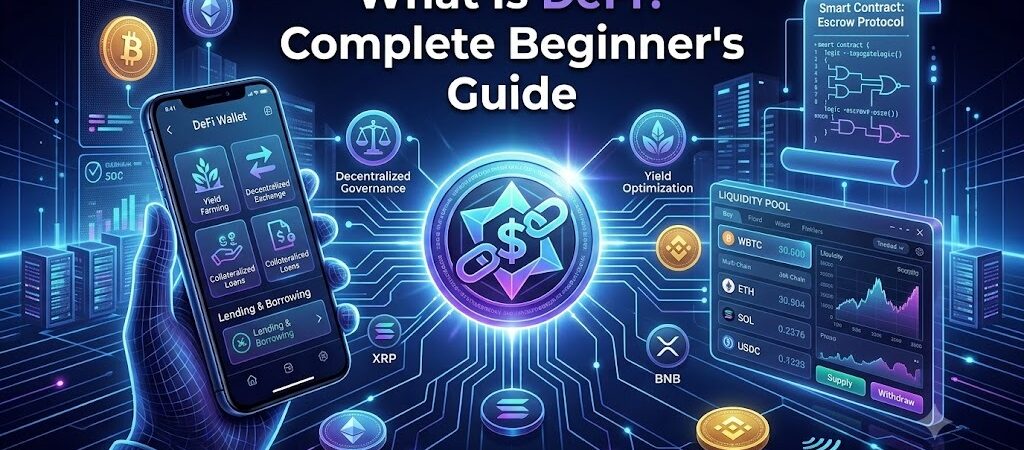
What Is DeFi? This is one of the most common questions asked by people entering the cryptocurrency world. Decentralized Finance, commonly known as DeFi, is changing how people access financial services by removing the need for traditional banks and intermediaries.
DeFi uses blockchain technology, smart contracts, and cryptocurrency networks to provide financial services such as lending, borrowing, trading, staking, and earning rewards. Unlike traditional finance, DeFi platforms operate through decentralized systems that allow users to have more control over their assets.
As cryptocurrency adoption continues to grow in 2026, understanding DeFi has become essential for beginners who want to explore the future of digital finance. This complete beginner’s guide explains how DeFi works, its benefits, risks, and the most important concepts every new user should know. https://cryptopulsemagazine.com/crypto-security-tips/
Whether you are new to crypto or looking to expand your knowledge, this guide will help you understand the fundamentals of decentralized finance.
What Is DeFi (Decentralized Finance)?
DeFi, short for Decentralized Finance, is a blockchain-based financial system that allows people to access financial services without relying on traditional banks, brokers, or other centralized institutions.
Instead of using traditional intermediaries, DeFi applications use smart contracts — self-executing programs built on blockchain networks — to automatically process transactions and financial activities.
In traditional finance, banks usually control services such as lending, payments, and savings. With DeFi, users can interact directly with decentralized platforms using cryptocurrency wallets, giving them greater control over their digital assets.
How Does DeFi Work?
DeFi operates through several important technologies:
1. Blockchain Networks
DeFi applications are built on blockchain platforms such as Ethereum, Solana, and other smart contract networks. What Is DeFi? These blockchains provide transparent and secure transaction records. https://cryptopulsemagazine.com/chainlink-price-prediction-2027/
2. Smart Contracts
Smart contracts are computer programs that automatically execute agreements when specific conditions are met. They remove the need for a middleman and allow DeFi services to operate 24/7.
3. Cryptocurrency Wallets
Users connect their crypto wallets to DeFi platforms to access services. Wallets allow users to manage their assets while maintaining control of their private keys.
4. Decentralized Applications (dApps)
DeFi services are provided through decentralized applications, also known as dApps. What Is DeFi? These applications allow users to perform activities such as lending, borrowing, swapping tokens, and earning rewards.
Why Is DeFi Important?
DeFi aims to create a more open and accessible financial system where anyone with an internet connection can participate. It provides opportunities for people who may not have access to traditional banking services and gives users more control over their financial activities. https://cryptopulsemagazine.com/xrp-price-prediction-2027/
By removing many traditional barriers, DeFi has become one of the fastest-growing sectors in the cryptocurrency industry.
How Does DeFi Work? (Beginner Explanation)
Understanding what is DeFi becomes easier when you learn how its main components work together. What Is DeFi? DeFi combines blockchain technology, smart contracts, cryptocurrencies, and decentralized applications to provide financial services without traditional intermediaries.
1. Users Connect Their Crypto Wallets
The first step in using DeFi is connecting a cryptocurrency wallet to a decentralized application (dApp). Unlike traditional banking, users do not create accounts controlled by a company. Instead, they connect their own wallet and maintain control of their assets.
Popular wallets used in DeFi include wallets that support networks such as Ethereum, Solana, and other blockchain ecosystems.
2. Smart Contracts Manage Transactions
Smart contracts are the foundation of DeFi. These programs run automatically on blockchain networks and execute transactions when specific conditions are met. https://de.fi/
For example:
- A user deposits cryptocurrency into a lending platform.
- The smart contract records the deposit.
- Another user borrows funds by following the platform’s rules.
- The system automatically manages repayments and rewards.
This process happens without requiring a bank or financial institution.
3. DeFi Uses Cryptocurrency Assets
Most DeFi platforms use cryptocurrencies and digital tokens to provide financial services. Users can:
- Deposit crypto assets
- Borrow digital currencies
- Trade tokens
- Provide liquidity
- Earn rewards through staking or farming
Stablecoins such as USDT and USDC are also commonly used because they are designed to maintain a stable value.
4. Decentralized Applications (dApps)
DeFi services operate through decentralized applications. What Is DeFi? These platforms provide different financial functions, including:
- Decentralized exchanges (DEXs)
- Lending and borrowing platforms
- Staking platforms
- Yield farming services
- Payment solutions
Unlike traditional apps, many DeFi applications are controlled by smart contracts and community-based governance systems.
5. Blockchain Provides Transparency
One major advantage of DeFi is transparency. Blockchain records all transactions publicly, allowing users to verify activity without depending on a central authority.
This open system helps create a financial environment where users can directly interact with digital assets.
Understanding these basic concepts makes it easier for beginners to explore the growing world of decentralized finance safely.
Popular Types of DeFi Applications
Now that you understand what is DeFi and how it works, the next step is learning about the different types of decentralized finance applications. DeFi provides many financial services that are similar to traditional banking but operate through blockchain technology.
1. Decentralized Exchanges (DEXs)
Decentralized exchanges allow users to trade cryptocurrencies directly without relying on a centralized exchange.
Unlike traditional platforms, DEXs use smart contracts to complete transactions between users. What Is DeFi? This gives traders more control over their assets because they do not need to deposit funds into an exchange account. https://www.defi.tech/
Examples of DeFi exchange activities:
- Swapping one cryptocurrency for another
- Providing liquidity to trading pools
- Earning fees as a liquidity provider
2. DeFi Lending and Borrowing
Lending and borrowing platforms are among the most popular DeFi services. What Is DeFi? They allow users to lend their crypto assets and earn rewards or borrow funds by providing collateral.
Lenders:
- Deposit cryptocurrency into a platform
- Earn potential interest or rewards
Borrowers:
- Provide collateral
- Receive loans without traditional credit checks
This system allows users worldwide to access financial services without depending on banks.
3. Stablecoin Platforms
Stablecoins are cryptocurrencies designed to maintain a stable value, usually linked to traditional currencies like the US dollar.
DeFi platforms use stablecoins for:
- Payments
- Trading
- Lending
- Reducing cryptocurrency price volatility
They provide users with a way to participate in DeFi while avoiding some of the price fluctuations of other cryptocurrencies.
4. Yield Farming
Yield farming allows users to earn rewards by providing liquidity to DeFi platforms. What Is DeFi? Users deposit their crypto assets into liquidity pools, and in return, they may receive additional tokens or fees.
While yield farming can provide opportunities for earning, it also involves risks such as market volatility and smart contract vulnerabilities.
5. Staking Platforms
Staking allows cryptocurrency holders to lock or delegate their tokens to help secure blockchain networks and earn potential rewards.
Many DeFi platforms offer staking services for users who want to generate additional returns from their digital assets.
6. Decentralized Insurance
Some DeFi projects provide blockchain-based insurance services designed to protect users against specific risks, such as smart contract failures or platform issues.
The DeFi ecosystem continues to expand with new applications and innovations. As more people learn what is DeFi, decentralized finance is becoming an important part of the future cryptocurrency landscape.
Benefits of DeFi (Advantages of Decentralized Finance)
Understanding what is DeFi also means knowing why millions of users are exploring decentralized finance. What Is DeFi? DeFi offers several advantages compared to traditional financial systems by using blockchain technology to create open, transparent, and accessible financial services.
1. Financial Access for Everyone
One of the biggest benefits of DeFi is global accessibility. Anyone with an internet connection and a cryptocurrency wallet can access DeFi services without needing approval from a bank.
This can help people in regions where traditional banking services are limited or unavailable.
2. Full Control Over Your Assets
In traditional finance, banks and financial institutions usually control customer funds. With DeFi, users maintain ownership of their cryptocurrency through personal wallets.
Benefits include:
- Direct control of digital assets
- No need for bank permission
- Ability to manage funds anytime
- Greater financial independence
3. Transparency
DeFi transactions are recorded on public blockchains, allowing anyone to verify activity. Smart contracts and blockchain records make the system more transparent compared to many traditional financial processes.
Users can review:
- Transaction history
- Smart contract activity
- Platform operations
4. Faster Transactions
Traditional financial services may take hours or days to process certain transactions. DeFi platforms operate on blockchain networks that can process transactions much faster.
Users can:
- Transfer assets globally
- Access financial services 24/7
- Avoid many traditional banking delays
5. Lower Barriers to Entry
Many DeFi platforms allow users to participate with smaller amounts of capital compared to traditional investment services.
Users can explore:
- Crypto lending
- Token swaps
- Staking
- Liquidity providing
without needing complex financial accounts.
6. Innovation and New Opportunities
DeFi has introduced new financial concepts that were difficult or impossible in traditional finance, including:
- Decentralized exchanges
- Automated market makers
- Tokenized assets
- Blockchain-based lending systems
- Community governance
These innovations continue to expand the possibilities of digital finance.
7. Global Financial Freedom
DeFi removes many geographical restrictions. A user in one country can interact with decentralized applications created by developers anywhere in the world.
However, users should always understand the risks and research platforms carefully before investing.
The advantages of DeFi explain why decentralized finance has become one of the most important developments in the cryptocurrency industry.
Risks and Challenges of DeFi
While learning what is DeFi, it is important to understand that decentralized finance also comes with risks. Although DeFi provides many opportunities, users should carefully evaluate potential dangers before using any platform or investing their assets.
1. Smart Contract Risks
Smart contracts are the foundation of DeFi, but they are created by developers and may contain coding errors or vulnerabilities.
If a smart contract has a security flaw, hackers may exploit it and cause financial losses.
Safety tips:
- Use well-known DeFi platforms
- Check security audits
- Research project history before investing
2. Cryptocurrency Price Volatility
Many DeFi activities involve cryptocurrencies, which can experience significant price changes.
For example:
- A token’s value may increase quickly
- Prices can also fall suddenly
- Market conditions can affect rewards
Users should understand market risks before committing funds.
3. Scams and Fake Projects
The growth of DeFi has attracted scammers who create fake platforms, tokens, and investment opportunities.
Common risks include:
- Fake websites
- Phishing attacks
- Fraudulent tokens
- Unrealistic guaranteed returns
Always verify official websites and never share your wallet recovery phrase.
4. Lack of Regulation
Unlike traditional financial institutions, many DeFi platforms operate without the same level of regulation.
This can create challenges such as:
- Limited customer protection
- Unclear legal situations
- Difficulty recovering lost funds
Users should research local regulations and platform reliability.
5. Impermanent Loss
Liquidity providers in DeFi pools may experience impermanent loss when the price of deposited assets changes compared to when they were added.
This risk mainly affects users who provide liquidity to decentralized exchanges.
6. Network Fees and Technical Issues
Blockchain networks can sometimes experience:
- High transaction fees
- Network congestion
- Delayed transactions
- Technical problems
These issues may affect the user experience and transaction costs.
7. User Responsibility
One major difference between traditional finance and DeFi is that users are responsible for protecting their own assets.
Important security practices include:
✅ Protect your private keys
✅ Store recovery phrases safely
✅ Use trusted wallets
✅ Avoid unknown links
✅ Research before investing
DeFi offers exciting opportunities, but understanding the risks is essential for making safer decisions. Beginners should start carefully, learn the technology, and only use funds they can afford to manage.
How Beginners Can Start With DeFi
After understanding what is DeFi, beginners can start exploring decentralized finance by following a few simple steps. The most important thing is to learn the basics, choose trusted platforms, and focus on security.
Step 1: Learn the Basics of Cryptocurrency
Before using DeFi platforms, understand important concepts such as:
- Blockchain technology
- Cryptocurrency wallets
- Private keys and recovery phrases
- Smart contracts
- Transaction fees (gas fees)
A strong foundation will help you make better decisions and avoid common mistakes.
Step 2: Set Up a Crypto Wallet
A cryptocurrency wallet is required to interact with DeFi applications. Your wallet allows you to store digital assets and connect with decentralized platforms.
When creating a wallet:
- Choose a trusted wallet provider
- Secure your recovery phrase offline
- Enable additional security features
- Never share your private keys
Step 3: Purchase Cryptocurrency
To use DeFi services, you need cryptocurrency supported by the platform you choose.
Common DeFi assets include:
- Ethereum (ETH)
- Solana (SOL)
- Stablecoins such as USDT and USDC
- Other blockchain-based tokens
Always use trusted exchanges and secure methods when purchasing crypto.
Step 4: Connect Your Wallet to a DeFi Platform
After setting up your wallet, you can connect it to decentralized applications.
Common DeFi activities include:
- Swapping tokens
- Lending cryptocurrency
- Borrowing assets
- Staking tokens
- Providing liquidity
Start with small amounts while learning how each platform works.
Step 5: Research Before Investing
Before using any DeFi protocol, check:
- Project reputation
- Security audits
- User reviews
- Development activity
- Community support
Avoid platforms that promise unrealistic guaranteed profits.
Frequently Asked Questions (FAQs)
1. What is DeFi in simple words?
DeFi stands for Decentralized Finance. It is a blockchain-based financial system that allows people to access services like lending, trading, and earning rewards without traditional banks.
2. Is DeFi safe for beginners?
DeFi can be useful, but it also has risks. Beginners should learn the technology, use trusted platforms, and start with small amounts.
3. Do I need a bank account to use DeFi?
No. DeFi generally requires only a cryptocurrency wallet and internet connection.
4. Can I make money with DeFi?
Users may earn through activities such as lending, staking, and liquidity providing. However, returns are not guaranteed and risks exist.
5. Which blockchain is best for DeFi?
Ethereum is one of the largest DeFi ecosystems, while other networks like Solana and BNB Chain also support many DeFi applications.
Conclusion
Understanding what is DeFi is essential for anyone interested in the future of cryptocurrency and digital finance. Decentralized finance is transforming traditional financial services by providing open access to lending, trading, staking, and other financial tools through blockchain technology.
DeFi offers many advantages, including transparency, accessibility, and greater control over digital assets. However, users must also understand the risks, including smart contract vulnerabilities, scams, and market volatility.
For beginners, the best approach is to learn gradually, use secure wallets, research platforms carefully, and practice good security habits. As DeFi continues to grow in 2026, it may play an important role in shaping the future of global finance.